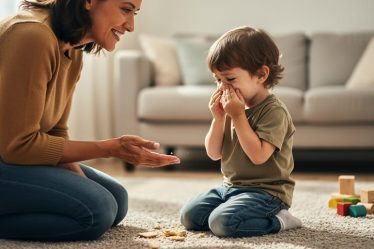
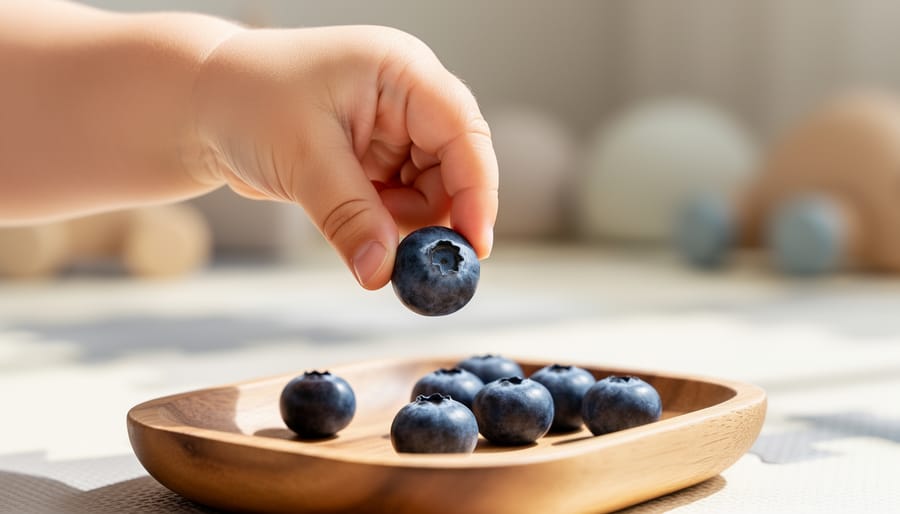
Fine motor skills are the small, precise movements of the hands, fingers, and wrists, the ones your child uses to pinch a Cheerio, turn a page, hold a crayon, or fasten a zipper. They develop in early childhood, usually from the first months of life through about age five, as little muscles get stronger and the brain and hands learn to work as a team.
Why does this matter so much? These skills sit underneath everyday independence. Feeding themselves, getting dressed, brushing teeth, and eventually writing their name all depend on them. And the good news is that they grow through ordinary play and daily routines, not special equipment or perfect timing.
Every child moves along this path at their own pace, and that’s completely normal. Some toddlers stack blocks early and avoid crayons for months. Others do the opposite.
In this article, we’ll walk through what fine motor skills actually include, how they typically develop from baby to preschooler, and simple ways to support them at home. Many of my favorite ideas happen right in the kitchen, where stirring, scooping, and tearing herbs double as hand-strengthening practice. I’d love to hear what has worked in your home too, so share your favorite activities in the comments as you read.
What Fine Motor Skills Really Mean for Little Hands
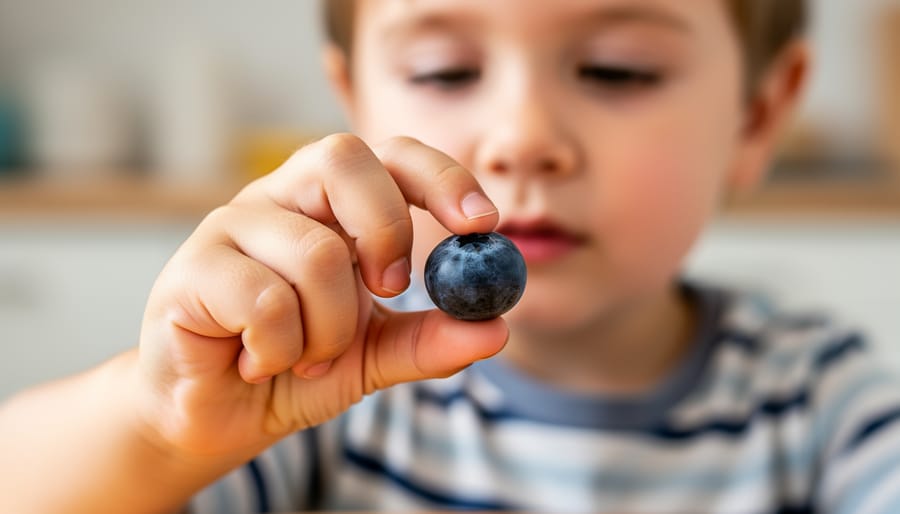
Fine vs. Gross Motor Skills: A Simple Way to Think About It
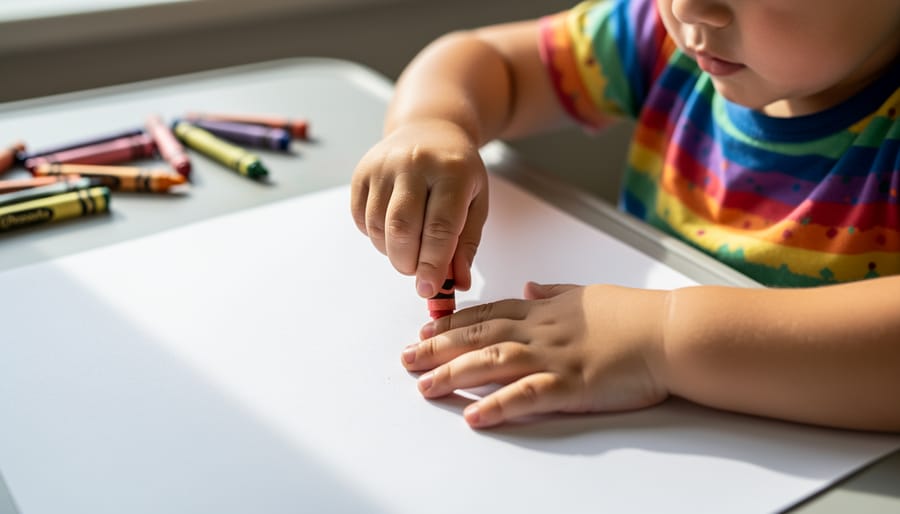
Here’s an easy way to tell the two apart: think big muscles versus small muscles. Gross motor skills use the large muscles in the arms, legs, and core. Running to the park, climbing the slide, and kicking a ball all count. Fine motor skills use the small muscles in the hands, fingers, and wrists. Stacking blocks, turning a page, or picking up a single Cheerio belongs here.
If a movement looks big and whole-body, it’s usually gross motor. If it’s small, careful, and happens mostly at the fingertips, it’s fine motor. Most activities use a bit of both, which is part of the fun.
- Fine motor skills
- Small, coordinated movements of the hands and fingers, like buttoning a shirt or holding a crayon.
- Gross motor skills
- Larger movements that use the arms, legs, and core, like walking, jumping, and climbing.
- Hand-eye coordination
- The ability to watch something with your eyes and guide your hands to match, like scooping peas onto a spoon.
- Pincer grasp
- Picking up small things neatly between the thumb and pointer finger.
- Grip strength
- The power in the hand and fingers that helps with squeezing, holding, and twisting.
- Bilateral coordination
- Using both hands together, such as holding paper steady while the other hand cuts.
Keep these terms handy, because we’ll lean on them as we look at how little hands grow.
How Fine Motor Skills Develop From Baby to Preschooler
Babies (0-12 Months): Grasping, Reaching, and Exploring
In the first few weeks, a baby’s tiny fist clamps around your finger by reflex. It’s sweet, but it isn’t a choice yet. Somewhere around three to four months, that grip softens into something deliberate, and you’ll see your little one swiping at a dangling toy or bringing both hands together to explore.
By six months or so, many babies pass a rattle from one hand to the other, and by nine to twelve months, the first finger-and-thumb pinch appears. It’s clumsy at first, more of a scoop than a pinch, but it improves fast.
I still smile remembering my niece at the high chair, studying a single soft piece of cooked carrot like it was treasure. She poked it, squished it, dropped it, and finally trapped it between her thumb and fingertip. The look on her face was pure triumph.
Every baby gets there on their own schedule, and plenty of floor time and safe objects to explore is all they really need.
Toddlers (1-3 Years): Stacking, Scribbling, and Self-Feeding
Somewhere between a first birthday and a third, the hands get busy. Toddlers love to stack blocks into wobbly towers, then knock them down with a delighted shriek. Both halves of that game count as practice. Page-turning comes next, usually a few pages at a time, and chunky crayons produce those bold, wandering scribbles that are the very first steps toward writing.
Mealtimes become a training ground too. Spoons end up half in the mouth and half on the floor, and that’s exactly how it should look at this stage. Simple knob puzzles, shape sorters, and big-handled pegs help little fingers learn to grip, twist, and place with care.
I still remember my niece concentrating so hard on a spoonful of yogurt that her tongue poked out, and yogurt landed in her hair. Messy, absolutely. But every smear is her hands learning what they can do.
Let the mess happen if you can. Lay down a wipeable mat, hand over the chunky tools, and enjoy the show.
Preschoolers (3-5 Years): Cutting, Drawing, and Dressing Themselves
Somewhere between three and five, little hands start doing real work. Safety scissors are usually a favorite: kids often begin by snipping the edge of a paper strip, then graduate to cutting along a wavy line, then a circle. Drawing grows right alongside it. Your preschooler may copy a circle, then a cross, then a square, and the pencil grip slowly shifts from a whole-fist hold toward a few-fingered pinch.
Dressing is where these skills show up in daily life. Threading chunky beads onto a shoelace builds the same finger control that handles a button or a zipper, so a bead-stringing afternoon counts as coat practice. Expect lots of crooked buttons and zippers that need a rescue at the door, and that’s perfectly normal. I still remember my niece beaming over a lopsided, wrong-hole buttoning job. Every child gets there at their own pace.
Everyday Ways to Support Fine Motor Skills at Home
Little Helpers in the Kitchen
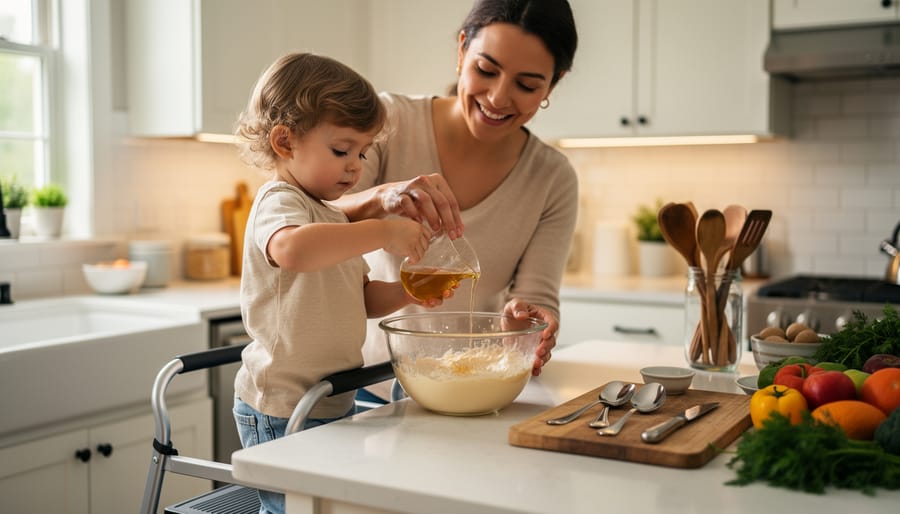
The kitchen is one of my favorite places to build little hands, because the practice hides inside something your child already wants to do: help. Last weekend my niece, perched on a sturdy stool, spent a full ten minutes tearing lettuce into “bunny bites,” and her fingers got a real workout without either of us calling it practice.
Here are some easy tasks to try, matched loosely to what small hands can manage:
– Washing veggies and scrubbing potatoes builds grip and wrist control.
– Tearing lettuce or herbs strengthens the pinch.
– Stirring thick batter works the whole hand and forearm.
– Pressing cookie cutters into dough takes steady downward pressure.
– Sprinkling toppings with a pinch of fingers practices fine release.
– Spooning ingredients into a bowl builds scooping and hand-eye coordination.
A few gentle reminders keep it fun for everyone. Stay close, especially around heat, sharp tools, and raw ingredients, and save the stove and knives for grown-up hands. Wash hands before and after, and keep a damp cloth nearby, since spills are part of the learning. Some kids dive right in while others watch first, and both are perfectly fine.
If you don’t have much time or space, the same skills grow outside the kitchen too. These simple ideas work nearly anywhere:
- Squishing and rolling play dough
- Threading pasta or large beads onto string
- Peeling and sticking stickers
- Tearing scrap paper into pieces
- Using tongs to move pom-poms between bowls
- Finger painting on paper or a tray
- Spooning dry beans from one bowl to another
What’s your little helper’s favorite kitchen job? I’d love to hear it in the comments.
Play-Based Activities That Don’t Feel Like ‘Practice’
Not every fine motor activity needs a lesson plan. Some of the best practice happens when a child is simply absorbed in play, and most of it uses things you already own.
For art, try chunky crayons, finger paint, or play dough. Rolling, pinching, and poking dough builds hand strength, and you can make a batch at home from flour, salt, and water. Sensory bins are another favorite: fill a shallow tray with dry rice, oats, or pasta and add scoops, spoons, and small cups. Toddlers love pouring and digging, while older kids can hunt for hidden buttons or pick out items with kid-safe tongs. Always stay close, since small pieces aren’t safe for little ones who still mouth things.
Building toys like blocks, stacking cups, and simple puzzles work well for every age. Older preschoolers might thread large beads or pasta tubes onto yarn, or tear colorful paper into a collage. Take it outside too. Pebbles, leaves, and mud make wonderful materials for outdoor fine-motor play no purchase needed.
Budget and space shouldn’t hold anyone back. A muffin tin and a handful of buttons, a cardboard box, or a bowl of water with a sponge all count. Kids stick with things that feel like play, and when they keep returning to a tricky task, they’re building practice and resilience right alongside those little hand muscles.
Common Questions Parents Ask About Fine Motor Development
Every family’s path looks a little different, so here are the questions I hear most often, answered the way I’d chat with a friend over coffee.
What age should my child hold a crayon?
Many little ones start grabbing a chunky crayon and making marks somewhere around the first birthday or a bit after, usually with a fist-style grip. A more refined grip tends to come gradually through the preschool years, and there’s a wide range of normal along the way.
Is it normal for my toddler to prefer one hand?
Totally. Many children show a lean toward one hand during the toddler and preschool years, and some switch back and forth for a while before settling. If your child is left-handed, simply offer comfy, left-friendly tools and let them lead.
Does tablet use affect fine motor skills?
Tapping and swiping use fingers, but they don’t offer the same variety as pinching, tearing, stirring, or squeezing. Balancing your family’s screen time habits with plenty of hands-on play is a gentle way to keep both in the mix, no guilt required.
When should I check in with a professional?
If you notice your child seems to be losing skills they once had, or you simply have a nagging feeling something’s off, it’s always okay to chat with your pediatrician. They can point you toward an occupational therapist if extra support would help.
As for how much practice is enough, there’s no magic number. Short, playful moments scattered through the day, like a few minutes of dough squishing before dinner or helping tear salad greens, usually beat long, formal sessions. A little celebration goes a long way to encourage progress without turning play into pressure.
And remember, comparing your child to the toddler next door rarely tells the whole story. Trust your instincts, keep things fun, and ask for help whenever you’d like some reassurance.
Putting It All Together: Fine Motor Skills as Part of the Bigger Picture
Fine motor skills never grow in isolation. Strong shoulders and a steady core give little fingers a stable base to work from, which is why climbing, jumping, and balancing matter just as much as threading beads. A good rhythm mixes active play with quiet hands-on time, and together they support the whole child, much like the bigger picture of promoting motor skills in early childhood development.
So, where do you start? Pick one small thing this week. Maybe it’s letting your little one tear the lettuce for dinner, or setting out a bowl of dry beans and a spoon for a quiet scooping game. That’s it. No special gear, no schedule, no pressure to do it perfectly.
Remember, every child’s journey looks a little different. Some kids pinch a blueberry at nine months, others take their sweet time, and both are completely normal. What matters is the steady, joyful practice that happens in the middle of ordinary life, and the fact that you’re showing up for it.
I’d love to hear how it goes in your house! Share your favorite simple activities, your child’s proudest fine motor wins, or any questions that are on your mind in the comments below. Your stories might be exactly the idea another parent needs this week.