
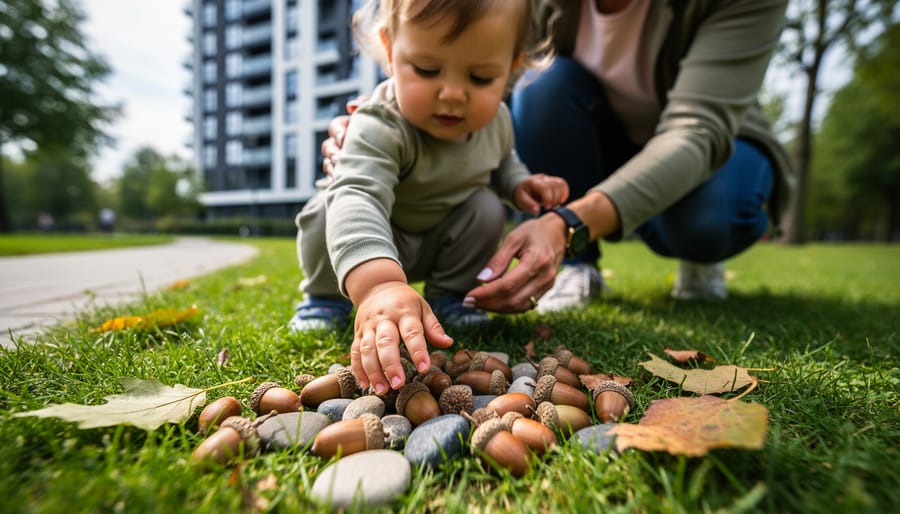
Learning in nature with young children doesn’t require a forest or specialized training. It starts the moment you step outside your door and invite your child to touch tree bark, count pebbles, or watch clouds drift overhead. The method is simple: create consistent outdoor time, follow your child’s curiosity, and let natural materials become the teaching tools.
I’ll never forget the afternoon my daughter spent an hour arranging acorns by size on our apartment building’s tiny patch of grass. No fancy curriculum, no Pinterest-perfect setup. Just her, the acorns, and time to explore. That’s when I realized nature-based learning isn’t about having access to wilderness or being an outdoorsy parent. It’s about recognizing that children learn through their senses, and the outdoor world offers textures, movements, and discoveries no classroom can replicate.
The research backs this up, too. Studies consistently show that children who spend regular time in natural settings demonstrate stronger problem-solving skills, improved focus, and better emotional regulation. But here’s what matters more than the data: you already have everything you need to begin. Your backyard, a nearby park, even a sidewalk crack where weeds push through becomes a laboratory when you slow down and observe alongside your child.
This guide walks you through the practical steps to weave nature into your routine, starting today. You’ll learn what basic supplies support outdoor exploration, how to keep young children safe while encouraging independence, and how to recognize when genuine learning is happening. Whether you have five minutes or an entire afternoon, nature is waiting.
What You’ll Need to Get Started
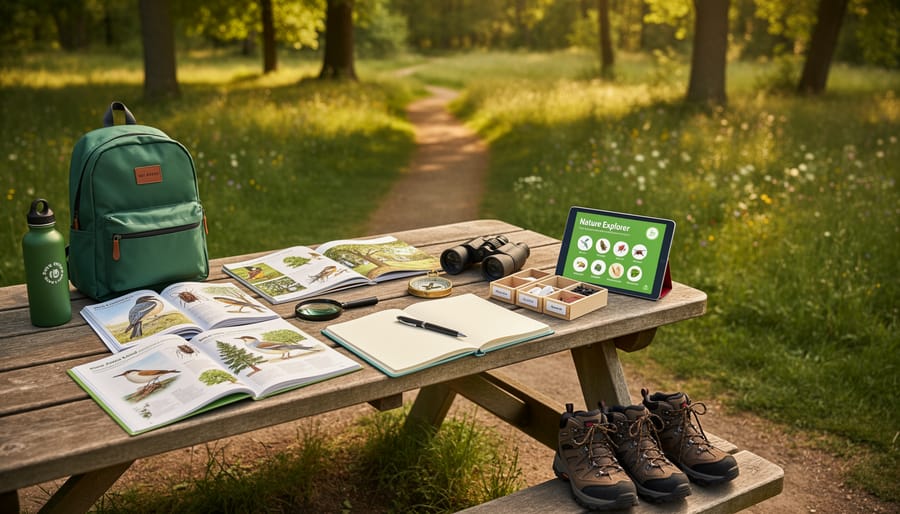
You don’t need much to start nature learning with young children, and you probably already have half of what you’ll need at home. The essentials focus on helping kids observe, document, and stay comfortable outdoors rather than purchasing specialized gear.
For observation and discovery, a simple magnifying glass transforms ordinary leaves and insects into fascinating close-up worlds. You can find these for a few dollars at dollar stores or use a clear plastic container filled with water as a makeshift magnifier. A small bucket or basket gives children a place to collect treasures during walks, though an old ice cream container works just as well.
Documentation supplies can be incredibly basic. A nature journal doesn’t need to be fancy, a spiral notebook or even folded printer paper stapled together serves the purpose. Include crayons or colored pencils for drawings and sketches. For pressing leaves or flowers, heavy books with wax paper sheets are perfect. Some families use their smartphones to photograph discoveries, which works wonderfully for tracking seasonal changes.
Here are the core items organized by purpose:
- Observation tools: magnifying glass, collection basket, plastic bug viewers
- Documentation supplies: notebook or journal, crayons or pencils, camera or smartphone
- Safety and comfort: weather-appropriate clothing, sunscreen, water bottles, first aid supplies
- Optional enhancements: field guides for local plants and animals, binoculars, gardening gloves for handling soil
Weather-appropriate clothing matters more than special outdoor gear. Layers work best since children heat up quickly during active play. Keep spare socks in your car because wet feet end outdoor adventures fast. Rain boots and a waterproof jacket extend your outdoor days beyond sunny weather, but sneakers and a hoodie work fine for dry conditions.
The environmental piece is simpler than you might think. Your backyard, a neighborhood park, a schoolyard, or even a patch of grass with a few trees provides enough nature for meaningful learning. Urban families can visit community gardens, botanical gardens, or tree-lined streets. The space doesn’t need to be wild or remote. Children find wonder in dandelions pushing through sidewalk cracks just as readily as they do in pristine forests.
Safety Considerations Before You Begin
Before you head outside with young children, a few straightforward safety checks make the difference between a joyful learning session and a stressful scramble. I learned this the hard way when my niece found poison ivy during our first nature walk because I’d skipped the pre-walk site survey.
Supervision is your baseline. For children under three, you’ll want an adult within arm’s reach at all times, especially near water features or uneven terrain. Preschoolers can explore with a bit more independence, but they should stay within your line of sight. A good rule is one adult per four to six children, depending on the setting and the children’s ages.
Weather shapes your outdoor time more than you might expect. Check forecasts before you go, and have a backup plan for sudden changes. Heat above 90 degrees or wind chills below 20 require indoor alternatives. For moderate conditions, dress children in layers and pack extra clothing. Sun protection matters year-round: broad-spectrum sunscreen, hats with brims, and shaded rest spots prevent burns even on cloudy days.
Plant and insect awareness keeps small hands safe. Teach children the “leaves of three, let it be” rule for poison ivy, and point out thorny plants or stinging nettles in your area. Inspect for bee nests, anthills, or wasp activity before settling into a spot. Long sleeves, closed-toe shoes, and insect repellent with DEET or picaridin can reduce bug-related risks during peak season.
Set clear, age-appropriate boundaries. Toddlers might have a visible perimeter like a fence line or garden edge. Older preschoolers can understand verbal boundaries: stay where you can see me, don’t climb higher than your shoulder, stop at the big oak tree. Walk the space together first so children know the limits before free exploration begins.
Step-by-Step: Creating Your Nature Learning Routine
Start with Simple Nature Observation
The simplest entry point into nature learning requires nothing more than stepping outside and pausing. Begin with just ten minutes in your backyard, a nearby park, or even a tree-lined sidewalk. Tell your child you’re going on a “noticing walk” where the only goal is to see what catches their attention.
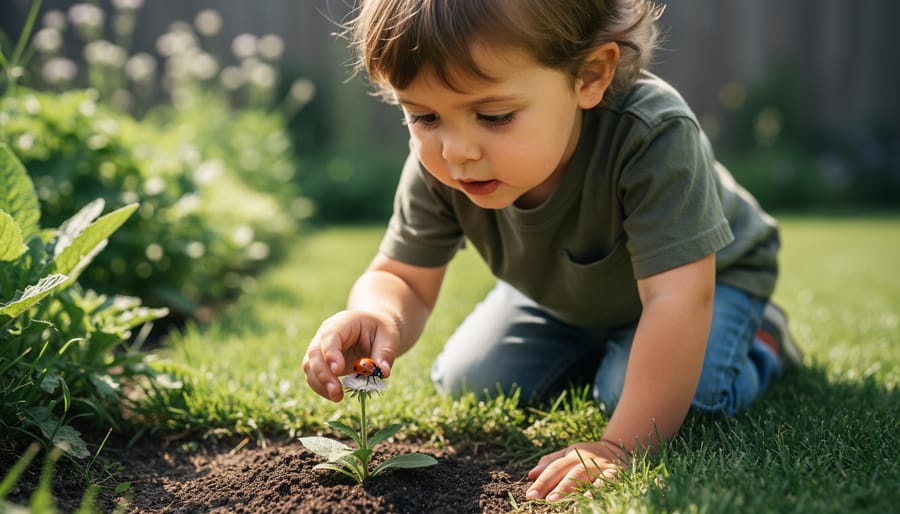
Resist the urge to direct or teach. When my daughter first started these walks, she spent five full minutes watching an ant carry a crumb. I nearly interrupted three times before realizing that sustained focus was the learning.
Ask questions that spark curiosity rather than test knowledge: “What do you notice?” “How does that bark feel when you touch it?” “What sounds do you hear right now?” These open-ended prompts invite exploration without requiring right answers.
Point out sensory details they might miss: “Look how the underside of that leaf is lighter than the top.” “Can you find something smooth and something bumpy?” With very young children, name what you observe together: “The wind is moving those branches” or “That bird is hopping from stone to stone.”
Notice seasonal markers as reference points: budding flowers, falling leaves, frost patterns, longer daylight. These observations become anchors for understanding time and change without formal instruction.
Introduce Hands-On Nature Activities
Once your child is comfortable observing nature, they’re ready for structured activities that turn natural materials into creative projects and learning opportunities.
Start with nature collections. Give toddlers a small bucket to gather leaves, sticks, or smooth stones during walks. Preschoolers can sort their finds by color, size, or texture when they get home. This simple activity builds categorization skills while letting them touch and examine what caught their eye.
Building projects work beautifully for all ages. Toddlers can stack rocks or arrange sticks into patterns on the ground. Preschoolers love constructing fairy houses from bark, moss, and twigs, which encourages imaginative play and fine motor development. Kindergarteners can tackle more complex designs like bug hotels made from hollow stems and pine cones tucked into cardboard tubes.
Planting activities connect children to growth cycles. Even two-year-olds can poke seeds into soil and water them. Four-year-olds grasp the concept of waiting and watching as sprouts emerge. By age five or six, children can maintain a small garden plot, measuring plant height and recording changes in their nature journals.
Nature-based art requires no special supplies. Leaf rubbings with crayons teach toddlers about texture. Preschoolers create collages by gluing collected materials onto cardboard. Kindergarteners can press flowers, paint with mud, or use natural items as stamps. These activities preserve outdoor discoveries while developing artistic expression and hand-eye coordination.
Rotate activities based on what’s available in your environment and your child’s current interests. The goal isn’t perfection but sustained engagement with the natural world.
Document Learning Through Nature Journals
My daughter started her first nature journal at three, and honestly, I expected it to be more about me doing the work while she watched. Instead, she surprised me by insisting on gluing in every leaf herself, even the crumbly ones that fell apart. That messy, imperfect journal became her favorite book.
For pre-writers, nature journaling works best when you let go of traditional expectations. Give toddlers and preschoolers thick paper or cardboard pages they can handle roughly. Let them tape or glue found items directly onto pages, flower petals, interesting bark, feathers they’ve collected. You can write their spoken observations next to their treasures: “This leaf is scratchy” or “I found this by the big tree.”
Older preschoolers can trace leaves, make bark rubbings with crayons, or draw what they see using their own developing style. A four-year-old’s circle with lines might represent a dandelion perfectly in their mind.
Keep supplies simple: a sturdy notebook, glue stick, clear tape, and crayons. Skip expensive scrapbooking materials. The goal isn’t creating a beautiful keepsake, it’s helping children slow down, notice details, and feel ownership over their discoveries. Date entries occasionally so you can revisit seasonal changes together later.
Connect Nature to Academic Concepts
Once you’ve established a comfortable outdoor routine, you’ll naturally start noticing how nature provides ready-made learning materials for academic concepts. The beauty is that children absorb these lessons through play, not worksheets.
For early math, use what’s right at your feet. Count pinecones as you collect them, compare which rock is bigger, or sort sticks by length. My daughter learned “more than” and “less than” by comparing her acorn pile to her brother’s. Pattern-making with fallen leaves, red, yellow, red, yellow, introduces sequencing without the child realizing they’re doing math work.
Literacy emerges through storytelling. Ask your child to create a story about the ant they’re watching or the bird they hear. Introduce descriptive words for textures: rough bark, smooth pebbles, prickly grass. Point out letters in nature, a Y-shaped branch, an O-shaped knot in a tree.
Science concepts are everywhere outdoors. Observe how shadows change position, watch seeds travel on the wind, or notice which areas stay muddy longest after rain. Ask “why” and “what if” questions rather than providing answers immediately. Let your child hypothesize why leaves fall or where puddles go.
The goal isn’t formal lessons but curiosity-driven discovery where academic concepts become part of the experience.
Build a Consistent Schedule
Consistency matters more than duration when building nature habits with young children. Start with a realistic commitment, even ten minutes daily beats an ambitious weekend plan that never happens. I anchor our nature time to existing routines: morning snack on the porch, an afternoon walk before nap, or Saturday garden check-ins.
Weather isn’t an obstacle once you shift perspective. Rainy days offer puddle exploration and earthworm observations. Snowy mornings become texture studies. Keep backup indoor nature activities ready, sorting your collection, reviewing photos, or planting seeds, for genuinely unsafe conditions.
When engagement wanes, rotate activities rather than locations. The same backyard becomes fresh when you switch from bug hunting to bark rubbings to cloud watching. Let children’s interests guide the rhythm; some weeks they’ll crave daily outdoor time, others need gentler encouragement.
Recognizing Success and Planning Your Next Steps
You’ll know nature-based learning is working when you notice your child asking to go outside, even when the weather isn’t perfect. Watch for increased curiosity, questions about why leaves change color, how birds build nests, or what makes mud feel different when it dries. Children who are genuinely engaged will bring their outdoor discoveries inside, proudly showing you a feather they found or recreating a bug’s movement during playtime.
Look for developmental shifts too. You might notice improved focus during nature time compared to indoor activities, or better problem-solving when children figure out how to balance rocks or navigate uneven terrain. Social skills often improve as kids negotiate who gets to use the magnifying glass first or collaborate on building a stick fort. Physical confidence grows, climbing higher, jumping farther, taking calculated risks they wouldn’t have attempted weeks earlier.
Once these signs appear consistently, consider deepening your practice. Many communities offer nature center memberships with guided programs led by naturalists who can answer questions beyond your expertise. Forest school programs provide structured outdoor learning if you want more support. Local botanical gardens often have family workshops that introduce new concepts like composting or pollinator gardens.
Seasonal transitions are natural expansion points. As autumn approaches, shift focus to migration patterns and seed dispersal. Winter invites tracking animal footprints in snow and observing dormancy. Spring brings opportunities to plant a small garden patch, while summer allows for creek exploration and insect identification.
As children mature, introduce field guides appropriate for their reading level, nature-based craft skills like weaving with grasses, or simple science experiments like testing soil pH. The progression should follow their interests rather than a rigid curriculum. Some kids will dive deep into bird identification while others become passionate about rocks or insects, let their fascination guide the direction.
Common Questions About Learning in Nature
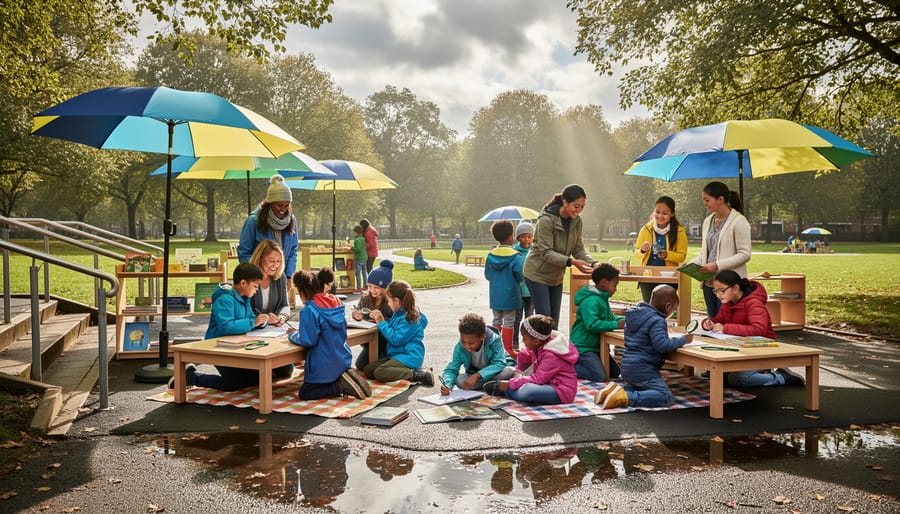
I’ve heard every worry before I took my first toddler group outside, weather, safety, time, and whether a tiny apartment balcony counts. Let me address the questions parents and educators ask most often.
What if we live in a city with limited outdoor space?
Urban nature learning works beautifully with what you have, balcony herb gardens, neighborhood trees, sidewalk cracks with dandelions, or weekly park visits all provide meaningful experiences. Even a single potted plant or window box gives toddlers opportunities to observe growth, seasons, and living things up close.
How much time do I realistically need each day?
Start with just 15-20 minutes of intentional outdoor observation, which fits easily into most routines. You’ll naturally expand as it becomes habit, but even brief daily nature moments build connection and curiosity more effectively than occasional long outings.
Can we really learn outside in winter or rainy weather?
Absolutely, different weather offers different learning opportunities, from watching rain patterns to exploring snow textures or tracking how animals prepare for cold. Proper clothing makes the difference; there’s no bad weather, just inappropriate gear.
How do I manage nature time with multiple kids of different ages?
Let older children become “nature guides” for younger siblings, which reinforces their own learning while building leadership skills. Design open-ended activities like nature scavenger hunts where each child engages at their developmental level, toddlers collect leaves while kindergarteners sort by characteristics.
The real beauty of nature-based learning is its flexibility. You’re not trying to recreate a forest school or follow a rigid curriculum. You’re simply creating regular opportunities for children to engage with the natural world in whatever form it takes in your life, whether that’s a backyard, a city park, or a nature preserve.
How to Check Your Work
Checking whether your nature learning integration is working doesn’t require formal assessments or standardized tests. Watch your child during and after outdoor time. Are they asking questions about what they see? Do they initiate nature activities on their own, like collecting sticks or examining bugs? These spontaneous behaviors signal genuine engagement.
Look for physical comfort outdoors. A child who initially resisted going outside but now puts on their jacket without prompting has made real progress. Notice whether they can focus for longer periods during nature time, extending from five minutes to fifteen or twenty indicates growing capacity for observation and exploration.
Check their language development. Children successfully learning through nature use more descriptive words, compare what they observe, and reference past outdoor experiences during indoor play or conversations.
If your child shows persistent anxiety outdoors, avoids all nature contact despite gentle encouragement, or hasn’t shown any increased interest after several weeks of consistent effort, consider consulting an occupational therapist or early childhood specialist. Some children need additional support processing sensory experiences, and professionals can offer strategies tailored to your child’s specific needs.
Starting your nature learning journey doesn’t require a detailed plan or expensive equipment, just step outside tomorrow. Choose one simple activity from this guide, whether it’s a ten-minute observation walk or collecting leaves in your yard, and notice what happens. The beauty of learning in nature is that it grows organically alongside your child.
The benefits you’ll see extend far beyond academic readiness. You’re building curiosity, resilience, and a lifelong connection to the natural world while creating memories that anchor your family to the seasons and rhythms outside your door. Some days will feel magical; others might involve muddy shoes and scraped knees. Both matter.
I’d love to hear about your first steps into nature-based learning. What outdoor discovery surprised your child this week? What obstacle are you working through? Share your story in the comments below, your experience might be exactly what another parent needs to hear today.