

Building resilience in young children means teaching them to bounce back from disappointment, manage big feelings, and approach challenges with confidence rather than fear. The five core strategies that work consistently are modeling healthy coping yourself, validating emotions before problem-solving, creating predictable routines with built-in flexibility, celebrating effort over outcomes, and giving children age-appropriate choices. These methods aren’t about preventing struggle. They’re about equipping your child with the internal toolkit to handle it.
I learned this the hard way when my daughter was four and melted down over a broken cracker. My instinct was to fix it immediately, to minimize her distress, to explain why it wasn’t worth crying over. What I didn’t realize then was that I was teaching her to bypass her feelings rather than process them. Resilience isn’t the absence of struggle. It’s the presence of skills to work through it.
The beautiful part? You don’t need a psychology degree or a perfectly calm household to raise resilient kids. You need consistency, not perfection. You need to show up during the hard moments, not just the easy ones. And here’s what surprised me most: building resilience in our children often builds it in us, too.
The parents and educators I’ve spoken with over the years share a common frustration. They want their children to develop grit and emotional strength, but they’re swimming in conflicting advice. Some experts say let kids fail. Others warn against unnecessary stress. The truth lives somewhere in the middle, and it’s more nuanced than a single parenting philosophy can capture.
What follows are five research-backed approaches that you can start using today, whether your child is a toddler navigating their first friendships or a school-age kid facing bigger social challenges. Each strategy includes specific steps, real scenarios, and signs that your efforts are working.
What You’ll Need to Support Your Child’s Resilience
Before you dive into specific strategies, it helps to know what you’re working with. Building resilience in young children doesn’t require expensive toys or elaborate programs. What you need are internal resources and intentional practices that become part of your daily rhythm.
The essentials for supporting your child’s exploration and coping include:
- Patience and consistency to show up even when progress feels slow
- Safe spaces for exploration, both physical environments where they can take risks and emotional safety where all feelings are welcome
- Age-appropriate books about feelings, problem-solving, and facing challenges
- A supportive community of family, friends, and other parents who can offer perspective and encouragement
- Protected time for genuine connection without distractions
These aren’t items you can add to a shopping cart. They’re commitments you make and mindset shifts you practice. Some days you’ll have more patience than others. Some weeks your calendar will be too packed for the kind of presence you want to offer. That’s normal. What matters is the overall pattern, not perfection in every moment.
Think of these resources as the soil conditions that allow resilience to take root. You’re creating an environment where your child feels secure enough to try, fail, feel, and try again. The specific strategies that follow all build on this foundation.
Important Considerations Before You Start
Before you dive into building resilience, let’s clear up what this actually means, and what it doesn’t. Resilience isn’t about raising a child who never cries, never struggles, or powers through everything without complaint. It’s not about toughening them up or teaching them to hide their feelings. In fact, the goal is exactly the opposite: we want children who can feel their emotions fully, express them appropriately, and then move through them with support and growing confidence.
One of the biggest mistakes I see parents make (and I’ve made it myself) is expecting toddlers and preschoolers to regulate their emotions like miniature adults. A three-year-old who melts down over a broken cracker isn’t being dramatic, their brain literally hasn’t developed the capacity for the kind of emotional control we take for granted. Pushing too hard or showing frustration when they can’t “just calm down” can actually undermine the secure foundation resilience requires. Meet them where they are developmentally, not where you wish they were.
It’s also worth remembering that every child develops resilience at their own pace. Some kids seem naturally bouncy, recovering from setbacks in minutes, while others need more time and support to process challenges. Neither approach is wrong, and comparing your child to siblings or peers will only create unnecessary pressure. Your job isn’t to speed up their timeline, it’s to provide consistent support along the way.
The 5 Ways to Build Resilience in Your Child
1. Create a Secure and Loving Foundation

When your child knows they can count on you, they build an inner confidence that says, “The world is safe enough for me to take risks.” That foundation starts with how you respond to their needs, especially in the earliest months and years.
Responsive caregiving in infancy means answering cries promptly, not because you’re spoiling them but because you’re teaching their nervous system that distress leads to relief. Research confirms that secure caregiving builds attachment which becomes the emotional springboard for resilience later. When my daughter was six months old, I’d rush to her bassinet at every whimper, sometimes second-guessing whether I was creating bad habits. Years later, I see how that responsiveness taught her she was worth comforting, a lesson she carries into preschool when things get hard.
Predictable routines matter just as much. A consistent bedtime sequence, the same lullaby, knowing that dinner comes after bath time, these patterns give children a sense of control in a world they’re still figuring out. For infants and toddlers (0-2 years), this might look like the same naptime ritual or always saying goodbye the same way at drop-off. For preschoolers (3-6 years), it can expand to weekly traditions like Friday movie night or Sunday morning pancakes.
Physical affection cements the message that they’re loved unconditionally. Hugs after a tantrum, holding hands during a scary moment, or just pulling them onto your lap while you read, these gestures communicate safety without words. Pair that with emotional availability: putting your phone down when they talk to you, getting down to their eye level during tough conversations, and acknowledging their feelings even when you can’t fix the problem. That’s the secure base from which resilience grows.
2. Teach Emotional Literacy and Expression

When my daughter was three, she threw herself on the kitchen floor because her sandwich was cut in triangles instead of squares. Instead of dismissing it as a silly tantrum, I knelt down and said, “You’re really disappointed right now. You wanted squares, and I gave you triangles.” Her sobbing slowed. She looked at me, nodded, and within a minute we’d solved the problem together. That moment taught me something powerful: children can’t regulate emotions they don’t have words for.
Teaching emotional literacy gives kids the language to understand what’s happening inside them. When they can name their feelings, those feelings become less overwhelming and easier to manage.
Start by narrating what you observe. When your toddler’s face reddens and their fists clench, say it out loud: “You seem frustrated that the blocks keep falling down.” For preschoolers, you might add nuance: “I notice you’re quiet and your shoulders are tight. Are you feeling worried about something?” This running commentary helps children connect physical sensations to emotional states.
Here’s a practical approach that works across different situations:
- Observe and narrate what you see without judgment: “I can see your face looks angry right now” or “Your body seems really excited.”
- Validate the feeling immediately: “It makes sense that you’re upset. That was really disappointing” or “Frustration is a normal feeling when things don’t work.”
- Offer age-appropriate coping strategies: “Should we take some deep breaths together?” or “Do you need a hug or some space?”
- Practice during calm moments by reading feelings books, making silly faces in the mirror to match emotions, or creating a simple chart with faces showing mad, sad, happy, scared, and excited.
Keep your own emotional vocabulary rich and specific. Instead of always saying “I’m fine,” try “I’m feeling a bit overwhelmed” or “I’m grateful right now.” Children absorb this language like sponges.
Remember this crucial boundary: all feelings are acceptable, but not all behaviors are. “I can see you’re angry, and anger is okay. Hitting is not okay. Let’s find another way to show your anger.” This distinction helps children feel seen without giving them permission to act out harmfully. You’re teaching them that emotions aren’t the problem, it’s what we do with them that matters.
3. Encourage Problem-Solving Through Safe Challenges
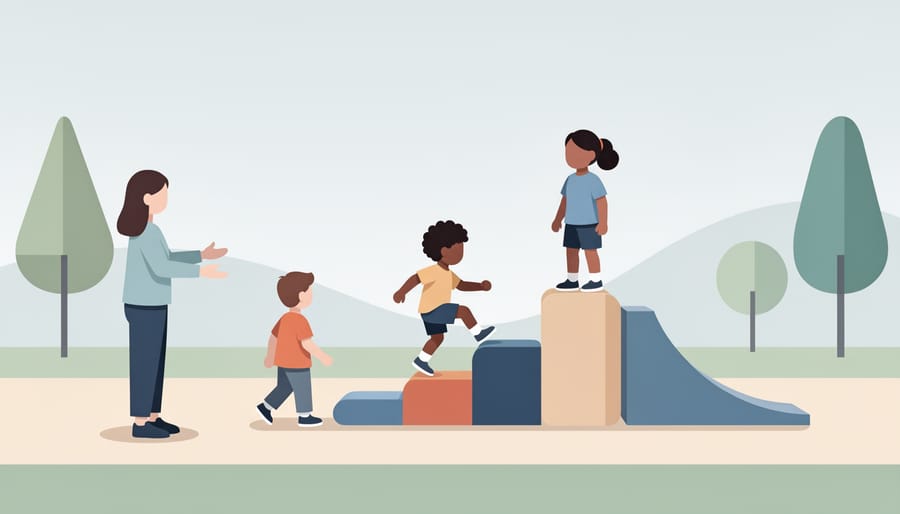
One of the hardest lessons I learned as a parent was stepping back when my daughter was struggling to zip her jacket. Every instinct told me to just do it for her, we were late, she was frustrated, and I could solve it in two seconds. But I waited. I said, “I believe you can figure this out,” and watched her fumble with the zipper for what felt like forever. When she finally got it, the pride on her face was worth every uncomfortable moment of restraint.
Resilience grows when children encounter manageable obstacles and discover they can overcome them. The key is offering age-appropriate challenges that stretch their abilities without overwhelming them. For toddlers, this might look like letting them attempt to put on their own shoes, even if they end up on the wrong feet. Preschoolers benefit from puzzles they can almost solve, or choosing between two outfits. Kindergarteners can handle slightly more: packing their own backpack, pouring their own water, or working through a minor friendship conflict before you intervene.
This doesn’t mean abandoning them to frustration. Scaffolding, offering just enough support to keep them engaged without taking over, is the balance. If your child is genuinely stuck, you might say, “What could you try next?” or “Show me what you’ve tried so far.” You’re coaching, not rescuing.
Safe challenges outside are especially valuable because nature provides built-in problem-solving opportunities. Climbing over a log, balancing on a curb, or building with sticks all develop nature-based resilience through trial and error.
The phrase “I believe you can figure this out” becomes a mantra. It signals trust in their capability while acknowledging the difficulty. Some days they’ll surprise you. Other days they’ll ask for help, and that’s okay too. Learning when to persist and when to ask for support is itself a resilience skill.
4. Model Resilience in Your Own Life
Children are watching everything we do, and that includes how we handle our own challenges. The most powerful resilience lessons often come not from what we tell our kids, but from what they see us living.
When you encounter a frustration, a recipe that doesn’t work, a technology glitch, a scheduling conflict, narrate your thought process out loud. “This is tricky, but I’ll try another way” is incredibly powerful language for little ears. So is, “I made a mistake, and now I need to fix it.” Your child doesn’t need you to be perfect. They need to see you cope, adapt, and keep going.
I still remember the day I snapped at my daughter over spilled juice, the third spill that morning. I saw her face crumple, and instead of doubling down or pretending it didn’t happen, I sat on the floor next to the puddle. “Mama got really frustrated and used a loud voice. That wasn’t fair to you. I’m sorry. Accidents happen, and I should have taken a deep breath instead.” She was three. She watched me clean up the juice, take that breath, and start again. That repair mattered more than the outburst.
Practice visible self-compassion. When you burn dinner or forget an appointment, resist the urge to berate yourself in front of your child. Instead, model grace: “Everyone makes mistakes. I’ll remember next time.” Show them what it looks like to ask for help when you need it, to take a break when overwhelmed, to admit when something is hard. Your imperfections aren’t failures, they’re your child’s resilience curriculum in real time.
5. Build Connection and Community
Resilience doesn’t grow in isolation. Children build emotional strength through connection with others, and a sense of belonging makes them braver when facing challenges. When your child knows they’re part of a community, whether that’s your family, a playgroup, or a circle of neighborhood friends, they develop the confidence that comes from being seen, valued, and supported.
Start with quality one-on-one time. This doesn’t mean elaborate activities. It’s the fifteen minutes of undivided attention while building blocks together, the morning snuggle before rushing out the door, or the bedtime conversation where you really listen. These moments tell your child, “You matter to me,” which becomes their inner voice during tough times.
Extend that circle outward. Regular visits with grandparents, cousins, or close family friends give children multiple safe adults to turn to. They learn that love and support come from many sources, not just one. If you have a trusted neighbor who always asks about your preschooler’s latest fascination, that relationship counts. It all adds up.
Playgroups, library story times, or community activities introduce cooperative play and shared experiences. Watching other children navigate frustrations teaches empathy. Your four-year-old sees another kid struggle with the slide, then try again, and absorbs that lesson without you saying a word.
Here’s the part many of us forget: let your child see you ask for help. When you call a friend because you need advice, or admit to your partner that you’re overwhelmed, you’re modeling a crucial resilience skill. You’re showing that reaching out isn’t weakness, it’s wisdom. That lesson might be the most powerful gift you give them.
How to Know It’s Working
You won’t see a sudden transformation, and that’s perfectly normal. Resilience develops gradually, showing up in small moments you might easily miss if you’re not paying attention. Your three-year-old who once melted down over a broken cracker now takes a deep breath and asks for a new one. Your five-year-old attempts the monkey bars again after falling yesterday, maybe with a quick “I can do hard things” muttered to herself.
Watch for these encouraging signs. Children who are building adaptability resilience start expressing emotions with words more often than pure meltdowns, though tantrums don’t disappear entirely. They’ll say “I’m mad” or “That made me sad” before completely losing control. You’ll notice them bouncing back from disappointments more quickly, whether it’s a cancelled playdate or a tower that keeps falling. They begin attempting new activities with curiosity rather than immediate resistance, and crucially, they ask for help when they genuinely need it instead of either giving up or spiraling.
The timeline varies wildly by child and age. A toddler might show progress in weeks, while deeper emotional regulation can take months or years to solidify. Hard days will still happen. A growth spurt, illness, family stress, or developmental leap can temporarily set things back, and that doesn’t erase the foundation you’ve built.
Think of these early years as compound interest for emotional health. The secure attachment formed at two, the problem-solving practice at four, the emotional vocabulary learned at five, all of it stacks. You’re not just helping your child handle today’s scraped knee or friendship conflict. You’re building the internal scaffolding they’ll rely on through adolescence, career challenges, relationships, and every future hardship they’ll face.
Common Questions About Building Resilience
What if my child is naturally sensitive?
Sensitivity is a temperament trait, not a weakness, and sensitive children can absolutely develop resilience. They may need more emotional processing time and reassurance during challenges, but their heightened awareness can actually become a strength when paired with good coping skills.
Can you start building resilience too early?
You can’t start too early because resilience-building begins with responsive caregiving from birth. Meeting an infant’s needs promptly doesn’t spoil them, it creates the secure foundation that later allows them to handle stress and bounce back from setbacks.
How do I balance protection with independence?
Think of it as being a spotter at the gym rather than lifting the weight for them. Stay close enough to prevent serious harm, but let your child attempt the challenge, struggle a bit, and experience the satisfaction of figuring things out.
What if resilience wasn’t modeled for me growing up?
Many parents are building skills they never learned as children, and that’s completely okay. Learning alongside your child, seeking resources, and showing them that adults can grow and change is itself a powerful lesson in resilience and how it works across a lifetime.
Is therapy necessary or can parents handle this alone?
Most parents can support typical resilience development through everyday interactions and the strategies we’ve covered. However, if your child has experienced trauma, shows persistent anxiety or behavioral concerns, or if you feel overwhelmed, a child therapist can provide valuable guidance tailored to your family’s specific needs.
Remember that questions about resilience often arise when we’re in the thick of parenting challenges. If your toddler melts down over a broken cracker for the third time today, you might wonder whether any of this is working. Trust that you’re planting seeds. Some children show visible progress quickly, asking for help calmly or trying again after failure within weeks of consistent support. Others need months of patient reinforcement before you notice shifts in how they handle disappointment.
The fact that you’re asking these questions and seeking information already demonstrates the intentionality that builds resilience. You don’t need perfect answers or flawless execution. Your willingness to learn, adapt, and show up consistently for your child matters far more than getting everything right the first time.
Building resilience in your child isn’t about getting it right every single time. It’s about showing up, trying, and trusting that the small moments add up to something meaningful. Those bedtime conversations about feelings, the times you let them struggle with their shoelaces instead of rushing in, the way you model bouncing back from your own frustrations, they’re all deposits in an emotional bank account your child will draw from for years to come.
I think about the four-year-old I watched last week at the park, the one who fell off the climbing structure, cried for a minute, then brushed herself off and tried a different route to the top. Her parent wasn’t hovering or rescuing. They were just there, watching with quiet confidence. That’s what we’re building toward, not children who never fall, but children who know they can get back up.
The truth is, none of us were handed a manual on raising resilient kids. We’re learning as we go, making mistakes, and modeling recovery in real time. And that’s actually perfect, because our children don’t need us to be flawless. They need us to be present, responsive, and willing to grow alongside them.
The foundation you’re laying now will support your child through friendship conflicts, academic challenges, and eventually the bigger trials of adolescence and adulthood. That’s the beautiful part about building resilience in early childhood, it’s a gift that keeps giving.
What resilience-building moments have surprised you lately? I’d love to hear your stories in the comments below.