
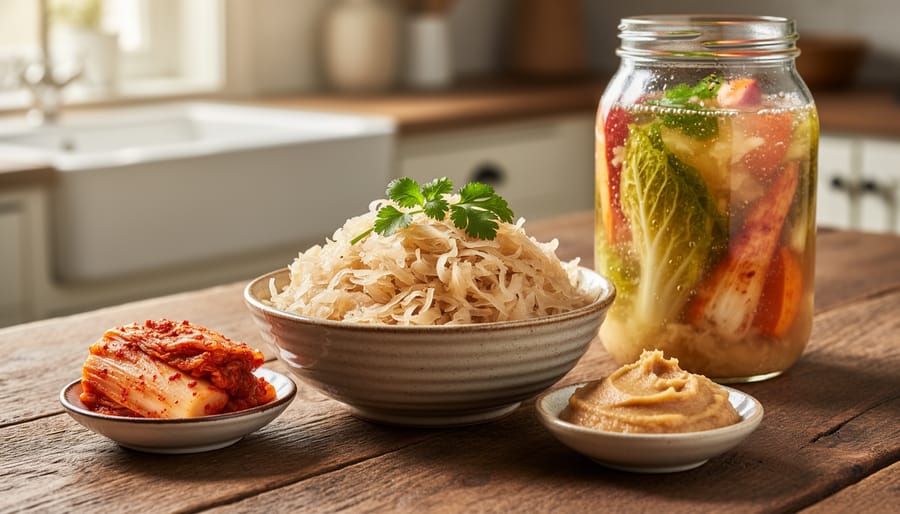
I’ll be honest: my journey with fermented foods started because I was desperate. After years of feeling bloated and uncomfortable after meals, I was willing to try anything that might help support my digestive system. A friend mentioned she’d been exploring fermented foods, so I decided to give sauerkraut a shot. Within a few weeks of regularly including it in my meals, I noticed changes in how I felt after eating, though everyone’s experience is different and what worked for me might not work the same way for you.
Here’s what I wish someone had told me at the beginning: fermented foods aren’t a magic cure, and they’re definitely not a substitute for medical advice. If you’re dealing with persistent digestive issues, talking with a healthcare provider should be your first step. They can help you figure out what’s actually going on and whether adding fermented foods makes sense for your specific situation.
That said, fermented foods have been part of human diets for thousands of years across practically every culture. From Korean kimchi to German sauerkraut to Japanese miso, these foods contain beneficial bacteria that may support the diverse ecosystem in your gut. The science around gut health is fascinating and still evolving, with researchers continuing to learn about how the trillions of microorganisms in our digestive system interact with our overall wellness.
What I love most about this approach is how accessible it is. You don’t need expensive supplements or complicated protocols. Many fermented foods are sitting right there in your grocery store, and some are surprisingly easy to make at home. Over the coming sections, I’ll walk you through the best options to try, how to incorporate them without overwhelming your system, and which ones have become staples in my own kitchen.
What Makes Fermented Foods Different for Your Digestive System
When I first started learning about fermentation, I honestly thought it was just trendy kitchen magic. Turns out, there’s real science happening in those jars.
Fermentation is basically a process where bacteria, yeast, or other microorganisms break down the sugars in food. This creates beneficial compounds and live cultures that weren’t there before. The microorganisms doing this work are what we call probiotics explained living bacteria that may support the balance of microorganisms in your digestive tract.
Research on fermented foods and gut health suggests these live cultures might help maintain a diverse gut microbiome, which plays a role in digestion, nutrient absorption, and overall wellness. Think of your gut as an ecosystem that thrives on variety. Fermented plant foods introduce beneficial bacteria that can contribute to that diversity.
What makes these foods different from popping a supplement is that fermentation also produces enzymes, vitamins, and organic acids that may make nutrients more bioavailable. Some people find that fermented versions of foods sit better in their system than the original versions.
Here’s what matters, though: incorporating fermented foods into a gut-friendly diet is about supporting your overall wellness, not fixing a medical problem. Everyone’s gut is different, and what works wonderfully for your friend might not work the same way for you. Some people notice changes in their digestion within weeks, while others see no dramatic shifts at all.
If you’re dealing with digestive issues, bloating, or any ongoing discomfort, talk to your healthcare provider before adding fermented foods to your routine. They can help you understand what’s right for your specific situation and rule out anything that needs medical attention. This is especially important if you have existing conditions or take medications that might interact with dietary changes.
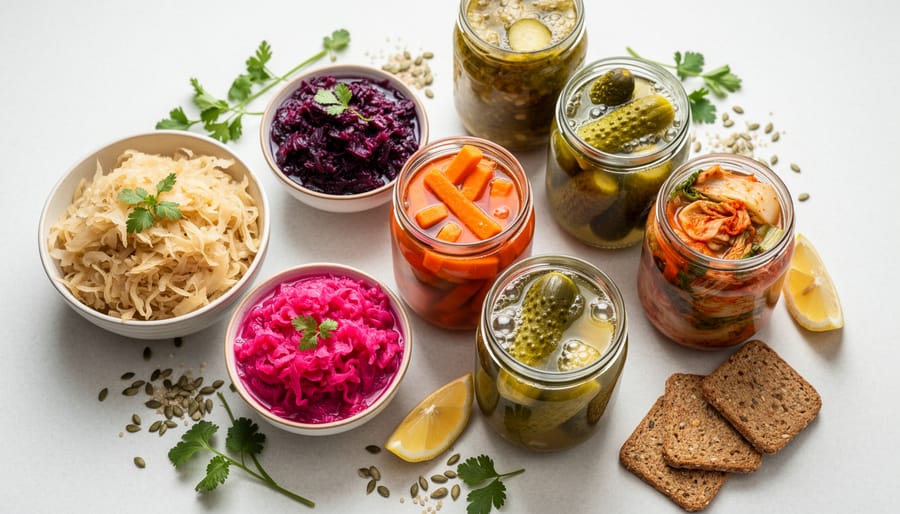
The Best Fermented Plant Foods to Try
Raw vs. Pasteurized: Why It Matters
Here’s my approach to explaining the pasteurization issue clearly while staying within the plant-based focus and avoiding medical claims.
When you pick up a jar of sauerkraut or kimchi at the grocery store, you might notice some are sold refrigerated while others sit on room-temperature shelves. This isn’t just about storage preferences. The difference usually comes down to whether the product has been pasteurized.
Pasteurization uses heat to kill bacteria, including the beneficial probiotics that form during fermentation. While this extends shelf life and makes products more stable for conventional retail, it means you’re essentially getting the flavor of fermented foods without the live cultures. Research shows that processing affects probiotic survival so if you’re specifically interested in the potential probiotic benefits, raw versions matter.
I learned this the hard way after wondering why my shelf-stable kimchi tasted great but seemed different from the refrigerated version I’d tried at a friend’s house. The refrigerated one had that active, slightly fizzy quality that indicated live cultures were still doing their thing.
When shopping, look for words like “raw,” “unpasteurized,” or “contains live cultures” on the label. These products will always be refrigerated. Check the ingredient list too. If you see vinegar listed early, it’s likely a quick-pickled product rather than traditionally fermented, which means fewer or no probiotics regardless of pasteurization.
For those new to this, starting with refrigerated, raw options gives you the full experience of what fermented plant foods can offer.
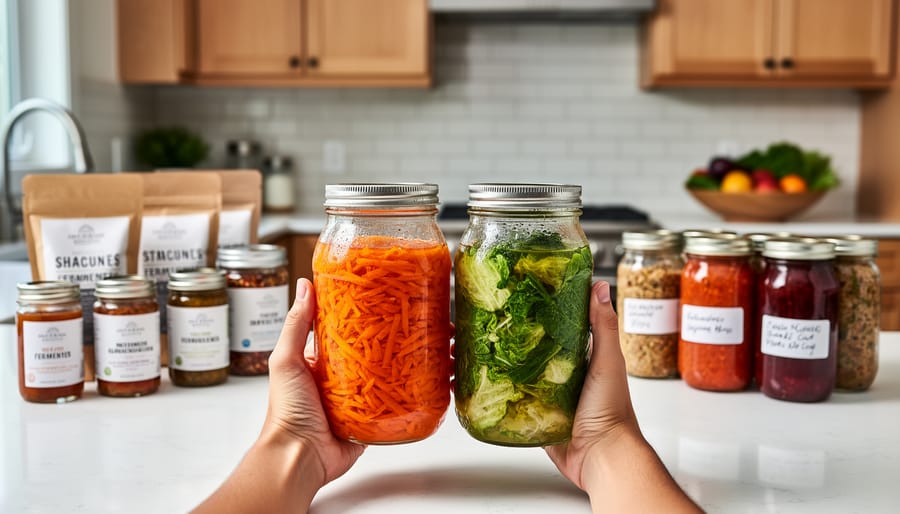
Starting Small: My Beginner-Friendly Picks
When I first started exploring fermented foods, I went straight for kimchi and kombucha because they seemed trendy. Big mistake. My stomach was not happy with me those first few days. Looking back, I wish I’d started with gentler options and worked my way up.
If you’re new to this, plain sauerkraut is honestly your best friend. I know it sounds boring compared to those beautiful kimchi jars, but it’s mild, versatile, and you can add just a forkful to whatever you’re already eating. I started by putting a tablespoon on my avocado toast in the morning, and gradually increased from there as my system adjusted. The sauerkraut benefits were noticeable for me over time, though everyone’s experience is different, which is why checking in with your healthcare provider is so important.
Plain kefir was another gentle starter for me, especially the unflavored varieties. I’d mix a quarter cup into my morning smoothie rather than drinking it straight. The tanginess blended right in with frozen berries, and I didn’t notice any digestive upset like I did with the kombucha.
Miso paste became my everyday go-to because you control exactly how much you use. I’d stir half a teaspoon into warm water as a simple broth, or add a tiny bit to salad dressings. It’s so mild that I barely noticed the fermented flavor at first.
My advice? Pick one thing, start with ridiculously small amounts, and give your body at least a week to adjust before adding something new. And definitely talk to your doctor before making changes, especially if you have existing digestive concerns.
How I Incorporate Fermented Foods Into My Daily Routine
I’ll be honest, I didn’t wake up one morning and suddenly start eating sauerkraut with my eggs. Building fermented foods into my routine happened gradually, and it looked different every week as I figured out what actually worked for my taste buds and schedule. What I’ve learned is that the easiest approach is starting small and finding swaps that feel natural rather than forcing yourself to choke down kombucha if you genuinely hate the taste.
My breakfast routine changed first because it required the least effort. I swapped regular yogurt for a good plant-based yogurt with live cultures, topped it with granola and berries, and called it done. Some mornings I’d add a spoonful of miso to my scrambled tofu or stir it into a warm bowl of oatmeal with savory toppings, sounds weird, but the umami depth makes it genuinely delicious. On days when I wanted something lighter, I’d blend a splash of plain kombucha into my smoothie for a subtle tang.
Here are the simple additions I rotate through regularly:
- Breakfast: Plant-based yogurt bowls, miso stirred into oatmeal or scrambled tofu, kombucha smoothies
- Lunch: Sauerkraut or kimchi tucked into wraps and grain bowls, tempeh bacon in sandwiches
- Dinner: Fermented vegetables as side dishes, miso-based dressings and marinades, crumbled tempeh in stir-fries
- Snacks: Pickled vegetables with hummus, kombucha as an afternoon drink, kimchi with rice crackers
The real game-changer was treating fermented foods as flavor boosters rather than health assignments. Once I started thinking about kimchi how to use it to add heat and complexity to my Buddha bowls, it stopped feeling like a chore. I’d pile it onto roasted sweet potatoes, mix it into fried rice, or serve it alongside simple baked tofu. Same with sauerkraut, it became my go-to sandwich topping and taco filling because it added crunch and brightness.
As for what to expect, I noticed some changes in how I felt over several weeks, but everyone’s experience is different and your body might respond completely differently than mine did. Some people notice shifts in their digestion relatively quickly, while others don’t perceive much change at all. It’s worth remembering that fermented foods are just one part of overall wellness, and if you have specific digestive concerns or medical conditions, talk with your healthcare provider before making dietary changes. They can help you understand what’s realistic for your individual situation and whether these foods make sense for you.
The biggest lesson I learned was to trust my own pace and preferences rather than following someone else’s strict fermentation protocol.

Making Your Own Fermented Foods at Home
I’ll be honest: my first attempt at making sauerkraut looked like a science experiment gone wrong. The cabbage floated to the top, the brine smelled funky, and I was convinced I’d poisoned myself. But after nervously tasting that first batch and realizing it was actually delicious, I was hooked. Home fermentation isn’t nearly as intimidating as it seems, and there’s something genuinely satisfying about creating your own probiotic-rich foods.
Sauerkraut is hands-down the easiest place to start. All you need is cabbage, salt, a jar, and patience. I shred about two pounds of cabbage, massage it with two tablespoons of sea salt until it releases liquid, pack it tightly into a clean quart jar, and weigh it down so the cabbage stays submerged in its own brine. Cover loosely to let gases escape, keep it at room temperature for 5-7 days, and taste it daily until it reaches your preferred tanginess. That’s it.
Quick-pickled vegetables are even simpler if you want instant gratification. I make refrigerator pickles by pouring a boiled mixture of equal parts water and vinegar, plus salt and spices, over sliced cucumbers or carrots. They’re ready in 24 hours, though technically these are pickled rather than fermented since there’s no live culture development.
When I was ready to start fermenting safely with slightly more advanced projects, I tried making kimchi and kombucha. Kimchi follows the same basic principle as sauerkraut but adds gochugaru, garlic, ginger, and vegetables like radish and scallions. Kombucha requires a SCOBY (symbiotic culture of bacteria and yeast), which you can buy online or get from a fermenting friend.
The key things I’ve learned: use clean equipment, trust the process even when it smells weird initially, and don’t panic about white film on top (it’s usually harmless kahm yeast you can skim off). Start with small batches so you’re not stuck with gallons of something you don’t like.
While I’ve enjoyed exploring home fermentation as part of my overall approach to eating well, everyone’s experience is different. If you have specific digestive concerns or health conditions, talk with your healthcare provider before making significant dietary changes.
What to Expect and When to Check In With Your Doctor
When I first started exploring fermented foods, I’ll be honest: the first week was interesting. My stomach made sounds I’d never heard before, and I felt a little more bloated than usual. This is completely normal for many people, and it’s exactly why starting slowly matters so much.
Your digestive system needs time to adjust to new foods, especially ones packed with beneficial bacteria. Some people notice gentle changes like slightly different bowel movements, temporary gas, or mild bloating during the first few days or weeks. For me, these settled down after about ten days, but everyone’s timeline is different. The key is paying attention to what your body tells you.
If you experience persistent discomfort, worsening symptoms, or anything that feels off, pause and check in with your doctor. This is particularly important if you have conditions like IBS, Crohn’s disease, ulcerative colitis, or if you’re immunocompromised. What works beautifully for one person might not suit another, and that’s perfectly okay.
I also learned to distinguish between normal adjustment and something requiring medical attention. Temporary mild gas is one thing. Severe cramping, persistent diarrhea, or new symptoms are signals to stop and consult your healthcare provider.
Remember, fermented foods are part of dietary exploration, not medical treatment. They’re one piece of a larger wellness picture that should always include professional healthcare guidance tailored to your unique needs and health history.
So there you have it, my journey into the world of fermented plant foods. Has it transformed my relationship with digestive wellness? Absolutely. But I want to be really clear here: this hasn’t been a magic bullet, and what works for me might be completely different for you.
The beauty of exploring fermented foods is that there’s no single right way to do it. Maybe you’ll fall in love with tangy sauerkraut on your morning eggs, or perhaps kombucha will become your afternoon ritual. Some of you might discover a passion for home fermenting, while others will stick to grabbing a jar from the grocery store. All of these approaches are valid.
What I’ve learned most is to listen to my body and work closely with my healthcare provider as I navigate dietary changes. If you’re dealing with digestive concerns, please chat with your doctor before diving into fermented foods, they can help you figure out what makes sense for your specific situation.
I’d love to hear from you! What’s your favorite fermented food? Are you a kimchi devotee or more of a miso person? Drop a comment below and let’s swap stories. This community has taught me so much, and I’m always curious about what’s working for others.
Remember, fermented foods are just one piece of the wellness puzzle, not a cure-all, but potentially a delicious addition to your journey.