
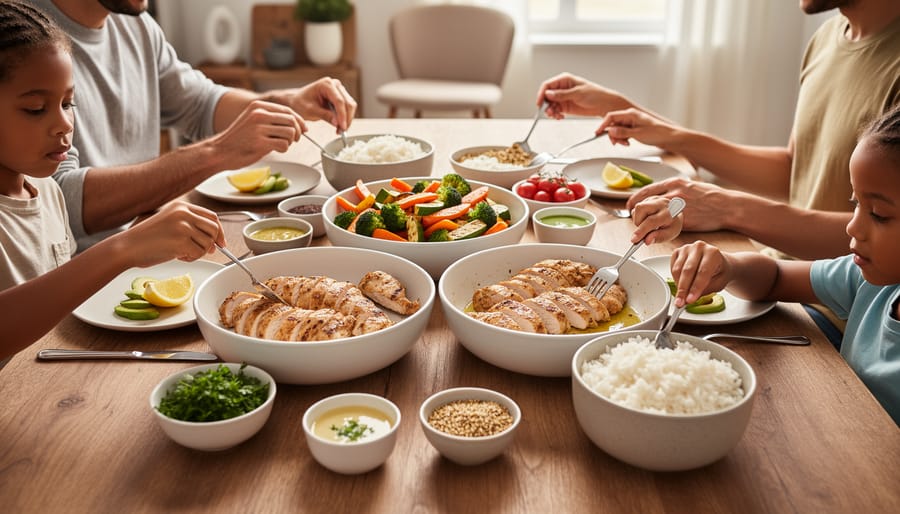
You can feed everyone at the table without making separate meals by using a base-plus-additions strategy. Start with a simple, allergen-free foundation (like grilled chicken, plain rice, or roasted vegetables), then customize each plate with toppings, sauces, or mix-ins that match individual dietary needs. This approach typically takes the same time as cooking one meal, usually 30 to 45 minutes, and works whether you’re managing one child’s dairy allergy or a household juggling three different restrictions.
I learned this the hard way after spending six months cooking duplicate dinners when my daughter was diagnosed with celiac disease. My frustration peaked the night I realized I’d made three versions of tacos and forgotten to eat my own dinner. That’s when I stopped thinking about special diets as exceptions requiring entirely different meals and started building flexibility into one shared cooking process.
The reality is that most dietary restrictions overlap more than they conflict. A meal safe for someone avoiding gluten is often perfectly suitable for someone eating low-carb or managing diabetes, especially when you focus on whole foods. The trick is identifying which components need to stay separate (like keeping croutons off a salad until serving) versus which everyone can share (the salad itself).
This method also preserves what matters most about family meals: sitting down together. Your seven-year-old with a peanut allergy still gets to eat the same stir-fry as everyone else, just without the peanut sauce her siblings love. No one feels singled out, and you’re not stuck making multiple grocery lists or cleaning extra pans.
Understanding Your Family’s Dietary Needs and Restrictions
The first time my daughter was diagnosed with celiac disease while my son was already managing a dairy allergy, I remember standing in my kitchen feeling completely lost. I didn’t know where to start, and honestly, I wasn’t even sure I fully understood the difference between what they absolutely couldn’t eat versus what they simply didn’t prefer.
Before you can plan special diet meals effectively, you need a clear picture of what you’re actually working with. Start by making a simple chart with each family member’s name and their specific dietary requirements. Be thorough here because this document becomes your reference point for everything that follows.
The critical distinction to understand is the difference between medical necessities and personal preferences. True dietary restrictions include allergies that trigger immune responses, intolerances that cause digestive issues or other symptoms, and medical conditions requiring specific nutritional management. These are non-negotiable. Your teenager not liking mushrooms is a preference, and while you can certainly work around it, it doesn’t carry the same urgency as your partner’s shellfish allergy.
Common special diets families manage include:
- Gluten-free (for celiac disease or sensitivity)
- Dairy-free (lactose intolerance or milk allergy)
- Low-sodium (heart health, blood pressure management)
- Diabetic-friendly (blood sugar control)
- Vegetarian or vegan (ethical, religious, or health reasons)
- Nut-free (severe allergy risk)
- Low-FODMAP (IBS and digestive disorders)
Once you have this information documented, talk with each family member about their symptoms, triggers, and any official diagnoses from healthcare providers. If you’re unsure whether something is a true medical need, consult with a doctor or registered dietitian. This clarity will guide every cooking decision you make and help you prioritize safety while still keeping meals enjoyable for everyone.
Essential Tools and Ingredients for Special Diet Cooking
You don’t need a complete kitchen overhaul to cook special diet meals successfully, but a few targeted additions will make your life dramatically easier. I learned this the hard way after spending my first month of gluten-free cooking constantly washing and re-washing surfaces, convinced I’d accidentally contaminated everything.
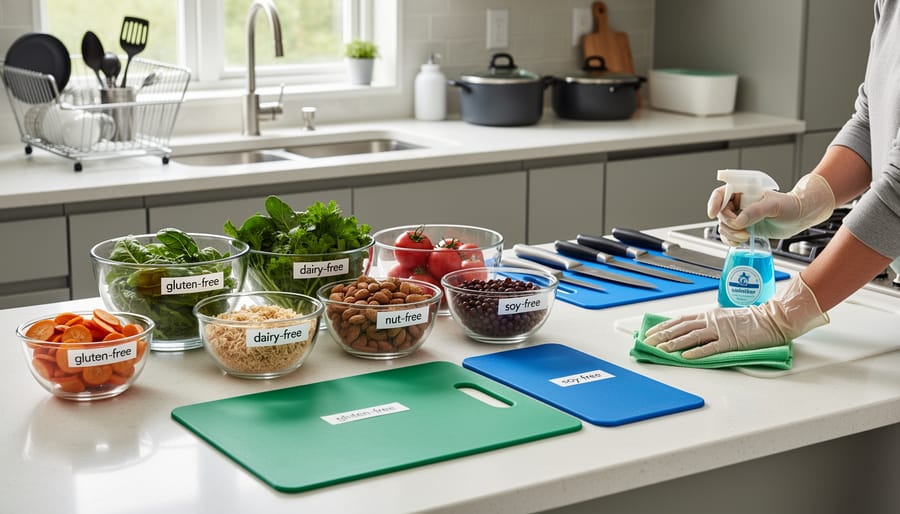
Start with color-coded cutting boards. Grab three in different colors from any kitchen supply store, assign one for gluten-containing foods, one for dairy if that’s a concern, and one for safe prep. This simple system prevents the anxiety spiral of wondering whether that cutting board touched wheat pasta two days ago. While you’re at it, pick up a second set of wooden spoons and silicone spatulas. Wood is porous, and even thorough washing can’t guarantee allergen removal.
Storage containers with tight-sealing lids are essential, both for batch-prepped ingredients and for clearly separating foods in your refrigerator. I use glass containers because they don’t absorb odors or colors, and you can see what’s inside at a glance. A label maker or good-quality masking tape and permanent markers help you mark containers with contents and preparation dates. Trust me, this prevents the “is this the regular marinara or the dairy-free version?” guessing game.
For your pantry, build a core collection rather than buying every specialty product at once. Stock versatile gluten-free flours like rice flour and almond flour, a reliable dairy-free milk that works in both sweet and savory recipes, and a neutral-flavored oil. Keep coconut aminos or tamari on hand as soy sauce alternatives. Good vegetable or chicken stock concentrate works across countless recipes.
The smartest investment I’ve made is a high-quality blender. It transforms cashews into cream sauce, creates smooth dairy-free soups, and pulverizes oats into flour when you’ve run out. One tool, dozens of special diet applications, and it takes up less counter space than a collection of single-use gadgets.
Safety First: Preventing Cross-Contamination and Allergen Exposure

Let me be direct: if someone in your family has a severe food allergy, your kitchen isn’t just a place to make dinner. It’s a space where a tiny mistake can trigger anaphylaxis. I learned this the hard way when my friend’s daughter had a reaction at a playdate because I’d used the same cutting board for her sandwich that I’d just used for peanut butter toast. Even after washing it. That was my wake-up call to treat allergen safety with the same seriousness I’d treat any other household hazard.
Start with dedicated equipment. You need separate cutting boards, knives, and utensils for allergen-free prep. Color-code them if that helps. Store them in different drawers so you never grab the wrong one mid-recipe. Wash your hands between handling different foods, not just with a quick rinse but with soap for 20 seconds. Wipe down counters with hot, soapy water before you start cooking anything for someone with restrictions.
Read every label, every time. Manufacturers change formulas without warning. That pasta sauce you’ve bought for years might suddenly contain milk solids. Check the allergen statement at the bottom and scan the ingredient list for hidden sources. Wheat hides in soy sauce. Milk appears as casein or whey. When cooking kid-friendly cooking projects, double-check that decorative sprinkles or food coloring don’t contain unexpected allergens.
Talk openly with your family about what’s safe and what isn’t. Younger kids need to understand they can’t share certain foods with siblings. Teach everyone to ask before tasting and to wash hands after eating trigger foods. If someone does accidentally consume an allergen, stay calm but act fast. Know your emergency protocol, watch for symptoms, and don’t hesitate to call for medical help.
The Step-by-Step Process for Planning Special Diet Family Meals
Step 1: Audit Your Week and Identify Overlap Opportunities
Start by looking at your actual week, not an idealized version. Grab a calendar or open your phone and mark when everyone will realistically be home for meals. Monday might be a full family dinner, but Tuesday could be sports practice pickups and scattered eating times.
Circle the meals where everyone sits down together, these are your priority cooking moments. Then identify nights when you’re rushed or people eat at different times. Those are perfect for leftovers, simple assembly meals, or grab-and-go options like pre-portioned bowls.
This weekly scan shows you where to invest your cooking energy and where to plan shortcuts, making special diet meal prep manageable instead of overwhelming.
Step 2: Build Your Master List of Family-Friendly Base Recipes
The secret to sustainable special diet cooking is having a reliable foundation of recipes that bend without breaking. I keep about twelve base meals in rotation, each one designed so I can swap components rather than start from scratch. Taco night works beautifully: corn tortillas for the gluten-free eater, flour for everyone else, seasoned ground turkey as the default protein with black beans on the side for our vegetarian. Build your list around naturally flexible meals like stir-fries (swap the protein and noodles), baked potatoes (endless safe toppings), grain bowls, and sheet pan dinners where everyone gets their own section. Even young kids can help in the kitchen assembling their customized portions. Write down what already works in your house, then identify three new adaptable recipes to try this month.
Step 3: Plan Modifications, Not Separate Meals
Here’s the game-changer: you’re not making two dinners. You’re making one dinner with smart swaps.
Start with a base everyone can eat, then modify at the last step. Grilled chicken becomes the protein base. Regular eaters get it over pasta with marinara. Your gluten-free kid gets it over rice. Your dairy-free partner skips the parmesan you’re passing around.
Look at each recipe and ask: what can I serve on the side instead of mixing in? Cheese, croutons, dairy-based sauces, and wheat-containing components work perfectly as optional toppings. The taco bar naturally follows this logic. So does stir-fry, where you can keep sauce separate.
This approach cuts your cooking time in half while everyone still sits down together. That’s what makes it sustainable.
Step 4: Prep Ingredients in Batches
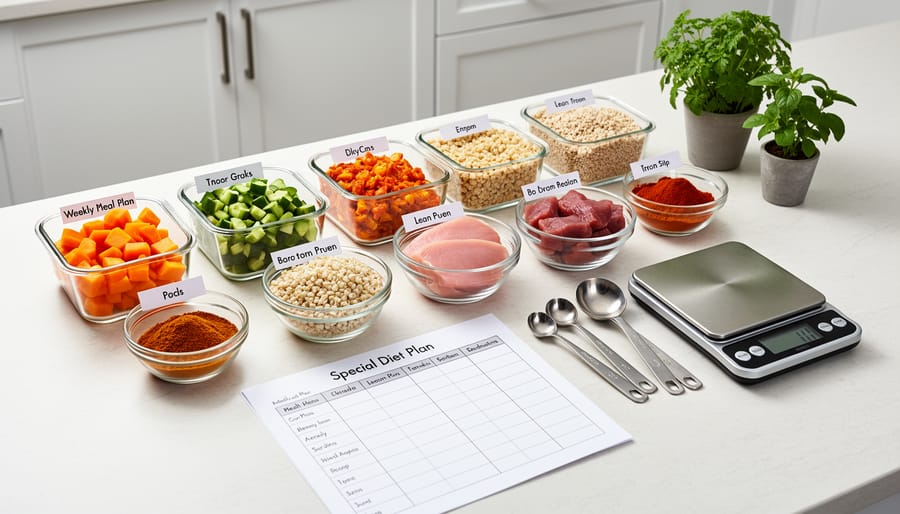
Batch prepping transforms your week. Dedicate two hours on Sunday to cook rice, quinoa, and pasta separately (label containers clearly to prevent mix-ups). Chop vegetables by type, bell peppers, carrots, onions, storing each in glass containers with paper towels to absorb moisture. Pre-cook proteins like grilled chicken, ground turkey, or baked tofu in plain seasonings you’ll flavor later. Make two or three base sauces: a dairy-free marinara, a nut-free pesto using sunflower seeds, and a basic vinaigrette. Store everything on designated shelves, top shelf for allergen-free items, lower shelves for regular versions. Prep no-bake sides like hummus or fruit salads in small portions. Always wash hands and sanitize surfaces between handling different allergen categories.
Step 5: Cook Smart with Assembly-Line Timing
Once your prep work is done, the actual cooking becomes a choreography exercise. Start with whatever takes longest and serves everyone, typically proteins or grains that need 20-30 minutes. While your chicken roasts or rice simmers, tackle the shared vegetables. Only in the final 10 minutes do you diverge for special needs: swap in gluten-free pasta for one person, add dairy cheese to three servings but leave one plain, or quickly pan-fry a separate protein if someone can’t eat the main one.
The secret is working backward from serving time. If dinner’s at 6pm, your timeline might look like: 5:15 start the shared protein, 5:30 begin vegetables, 5:45 heat the gluten-free alternative, 5:50 add toppings and garnishes to individual plates. Keep a simple written timeline on your phone for complex meals until the rhythm becomes automatic. Use your oven, stovetop, and microwave simultaneously to reheat or finish different components without bottlenecking at one appliance.
Step 6: Plate and Label Clearly
Clear presentation prevents dangerous mix-ups and helps everyone feel included at the table. Use distinct plates or placemats for family members with restrictions, color-coded works brilliantly, like blue plates for gluten-free or a specific placemat pattern for dairy-free meals. When serving buffet-style, place small tent cards or sticky notes identifying what each dish contains and what it’s free from (“chicken thighs – GF, DF”). If you’re plating individually, arrange special diet portions attractively with the same care you’d give any plate. Nobody wants their meal to look sad or different. Store leftovers in clearly labeled containers with the person’s name and dietary need noted. I learned this after my daughter accidentally grabbed her brother’s regular yogurt from the fridge, a label would’ve prevented that scare.
Step 7: Gather Feedback and Refine Your System
Once you’ve cycled through a week or two of meals, set aside ten minutes to talk with your family about what’s actually working. Ask specific questions: Which meals did everyone enjoy? Did anyone feel hungry an hour later? Were there dishes that took too long or created too much cleanup stress for you?
I do this casually over weekend breakfast, keeping notes on my phone. Kids are surprisingly honest when you ask “Should we keep taco Tuesday or try something else?” Their answers help me drop the meals that cause drama and repeat the winners more often.
Pay attention to your own energy levels too. If a particular modification routine leaves you exhausted, simplify it. Maybe you skip the homemade breadcrumbs and buy certified versions instead. Sustainable beats perfect every time, because a system that burns you out won’t last past next month.
How to Know Your System Is Working (and What to Do If It’s Not)
After a few weeks of following your special diet meal system, you should notice some clear improvements. Dinnertime feels less chaotic. You’re not scrambling at the last minute or cooking three different meals while everyone waits. Family members with dietary restrictions are eating comfortably without constant anxiety about ingredients, and everyone else is enjoying the food too. Your prep time has settled into a predictable rhythm rather than feeling like an endless project.
You’ll also see that your grocery bills stabilize as you waste less food and buy more efficiently. Batch prepping becomes second nature rather than a chore you dread. These are the tangible signs that your approach is sustainable.
But what if it’s not clicking? If meals still take forever, you might be trying too many new recipes at once. Scale back to three base recipes you can make in your sleep, then gradually add more. If family members seem hungry an hour after dinner, check your portion sizes and make sure you’re including enough protein and fiber in the modified versions.
Too much food waste usually means you’re prepping more variety than your family actually wants. Stick with proven favorites and prep smaller quantities until you nail down what gets eaten. And if you’re feeling overwhelmed, give yourself permission to simplify. Rotisserie chicken with safe side dishes counts as a win. Breakfast for dinner works. The goal is feeding your family safely and consistently, not impressing anyone with culinary complexity.
Real-Life Special Diet Meal Ideas That Work
Here are three meal frameworks I’ve used countless times when my sister-in-law (gluten-free, dairy-free) visits and I need to feed six people with different needs:
Breakfast: Build-Your-Own Breakfast Bowl Bar
Cook a big batch of quinoa or rice as the base. Set out toppings in separate bowls: scrambled eggs, sautéed vegetables, avocado slices, dairy cheese for some and nutritional yeast for others, salsa, and fresh herbs. Everyone builds their own bowl. My daughter adds berries and almond milk to turn hers into a sweet version, while my husband loads up on eggs and vegetables. The base grain works for nearly everyone, and the customization prevents anyone from feeling left out.
Lunch: Deconstructed Sandwich Platters
Instead of assembled sandwiches, lay out proteins (grilled chicken, hummus, tuna salad), bread options (regular sliced bread, gluten-free bread, lettuce wraps), and sides (sliced vegetables, pickles, fruit, chips). Add quick kid snacks like crackers and cheese for variety. Everyone assembles what works for them. This approach saved me during a particularly hectic week when three kids needed different lunch solutions.
Dinner: Sheet-Pan Protein with Roasted Vegetables and Grain Options
Season chicken thighs, salmon, or tofu identically and roast on separate areas of a sheet pan with vegetables. Serve alongside two grain options: regular pasta and gluten-free pasta, or rice and cauliflower rice. The proteins and vegetables are naturally adaptable, and offering two starch choices covers most dietary needs without cooking entirely separate meals. Use the same olive oil, garlic, and herb seasoning on everything so flavors still feel cohesive across the table.
Common Questions About Cooking Special Diet Meals for Families
Doesn’t cooking special diet meals cost significantly more?
It can be more expensive if you’re buying lots of packaged specialty products, but focusing on whole foods and batch cooking keeps costs reasonable. Rice, beans, potatoes, seasonal vegetables, and eggs are naturally allergen-friendly and budget-friendly, and many simple meal add-ons like roasted vegetables or fresh fruit work for everyone without special ingredients.
What if my family members resist eating “different” food?
Focus on familiar dishes first and modify them subtly rather than introducing entirely new cuisines. Tacos, pasta, stir-fries, and breakfast bowls are already customizable, so family members won’t notice they’re accommodating someone’s dietary needs. Involving kids in cooking also helps them feel ownership rather than resentment.
How do I handle restaurants when someone has strict dietary restrictions?
Call ahead to ask about ingredients and cross-contamination protocols, or check restaurant websites for allergen menus. Chain restaurants often have more detailed allergen information available than independent places. For severe allergies, carrying safe snacks and explaining the situation to servers directly prevents misunderstandings.
What about school lunches when my child has dietary restrictions?
Pack lunches whenever possible to maintain control over ingredients and cross-contamination. If using the cafeteria, meet with the school nurse and food service director at the start of the year to review protocols and get copies of menus. Many schools now have allergen-safe tables and procedures, but verification is essential.
How do I keep special diet meals interesting without getting stuck in a rut?
Rotate through different cuisines using your safe ingredients rather than making the same recipes weekly. Mexican, Italian, Asian-inspired, Mediterranean, and comfort food styles all work with dietary modifications. Swap proteins, change seasonings, and vary cooking methods to keep flavors fresh even when using the same base ingredients.
Where can I find more recipe ideas that work for multiple dietary needs?
Look for food blogs and cookbooks focused on allergen-free or specific diets, but adapt them to your family’s exact needs rather than following them rigidly. Online communities for parents managing dietary restrictions share tested recipes and modification tips. Searching for recipes by what you can eat rather than what you’re avoiding yields better results.
The questions above come up constantly in my inbox and in conversations with other parents managing special diets. The cost concern is legitimate but often overblown when you shift your thinking from processed specialty products to naturally compliant whole foods. Resistance from family members usually softens once they realize they’re not being forced to eat weird food, just slightly adjusted versions of meals they already like.
Restaurant dining requires more planning and assertiveness than it used to, especially with severe allergies in the mix. I’ve learned to be direct with servers and not apologize for asking detailed questions. Your family member’s health isn’t an inconvenience. School lunches remain one of the trickier areas because you’re trusting others with preparation, which is why most families I know with serious restrictions default to packing.
Learning to cook special diet meals that work for your whole family won’t happen overnight, and that’s completely okay. The first few weeks might feel clunky as you figure out timing, discover which substitutions your family actually enjoys, and build your confidence with new ingredients. But I promise it gets smoother. What feels like juggling too many variables now will soon become second nature, just like any other cooking skill you’ve developed over the years.
You’re doing something genuinely hard, and you’re doing it because you care deeply about keeping your family healthy and connected around the table. That matters more than perfect execution every single time.
I’d love to hear how you’re managing special diets in your household. What’s your go-to adaptable recipe that saves you on busy nights? Are you struggling with a particular dietary combination that has you stumped? Drop a comment below and let’s figure it out together. Our community is full of creative problem-solvers who’ve been exactly where you are now, and someone might have the perfect tip you haven’t tried yet.
This is a conversation, not a lecture. We’re all learning together.