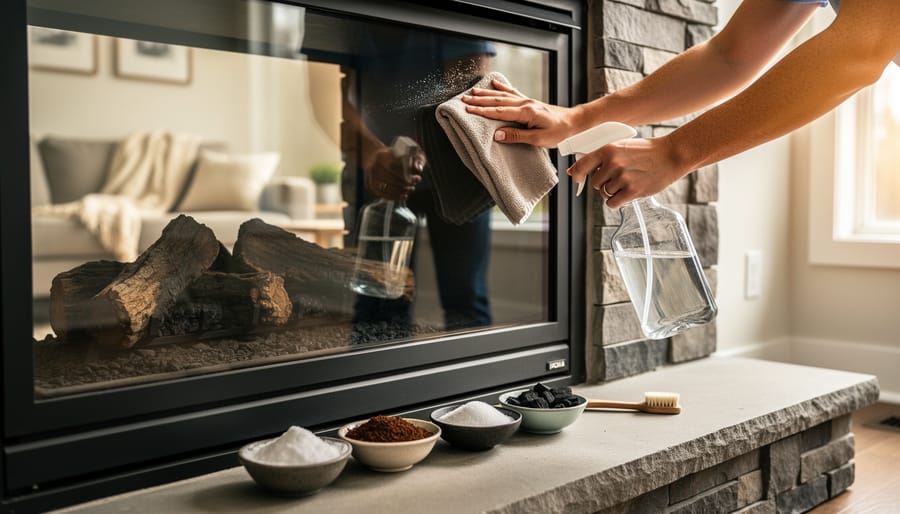
Mix equal parts white vinegar and water in a spray bottle to cut through soot and grime on fireplace glass doors—spray generously, let it sit for five minutes, then wipe clean with newspaper for a streak-free shine. Sprinkle damp coffee grounds over cooled ashes before sweeping them out to weigh down fine particles and prevent them from becoming airborne throughout your home. Create a gentle scrubbing paste using baking soda and a few drops of water to tackle stubborn creosote buildup on brick or stone surrounds, working in circular motions with an old toothbrush for detailed areas.
I learned these methods after my daughter developed respiratory sensitivities, and suddenly those chemical-laden cleaners felt far too risky to keep using near our family gathering space. The relief I felt discovering that pantry staples could tackle the job just as effectively was immense. Regular maintenance between professional inspections matters tremendously—combining these home cleaning strategies with seasonal deep cleans keeps your fireplace functioning safely while protecting your family from harsh fumes.
Harness the natural abrasive power of salt by sprinkling it directly onto fresh fireplace spills while the hearth is still warm—the salt absorbs grease and makes cleanup easier once everything cools. For ongoing freshness, place bowls of activated charcoal or baking soda near the fireplace to absorb lingering smoke odors naturally. Remember that while DIY cleaning handles surface maintenance beautifully, scheduling annual inspections with a professional chimney sweep Clearwater ensures structural safety and proper ventilation throughout your home.
Why Non-Toxic Cleaning Matters for Your Fireplace
I’ll be honest with you—I used to grab whatever fireplace cleaner was on sale at the hardware store without giving it much thought. That changed when my daughter developed a persistent cough one winter, and our pediatrician asked about our indoor air quality. It turns out those conventional fireplace and chimney cleaning products I’d been using weren’t as harmless as I assumed.
Traditional fireplace cleaners often contain harsh chemicals like trisodium phosphate, ammonia, and various solvents. While they’re effective at cutting through creosote and soot, these substances leave behind residues that don’t just disappear. When you light your next fire, the heat can cause these chemical residues to vaporize and circulate throughout your home. We’re essentially creating harmful emissions indoors, right where our families spend most of their time.
For families with children and pets who spend time near the hearth, this becomes particularly concerning. Little ones playing on the floor near the fireplace or curious pets investigating the area can come into direct contact with these residues.
The good news? Making the switch to natural cleaning alternatives doesn’t mean sacrificing cleanliness or safety. You can maintain a beautifully clean fireplace while protecting your family’s health and improving your indoor air quality. It’s simply about choosing methods that work with your home environment rather than against it—no judgment if you’re just learning about this now. We’re all doing our best to create healthier homes for the people we love.
Essential Non-Toxic Cleaning Supplies You Already Own
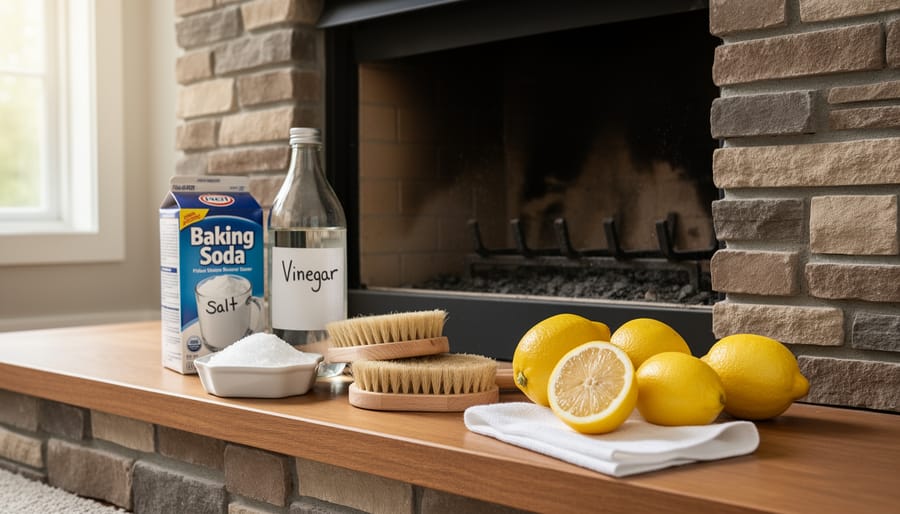
Here’s something that might surprise you: the best fireplace cleaning supplies aren’t hiding in some specialty store aisle. They’re probably sitting in your kitchen cabinets right now! When I first realized I could tackle our fireplace mess without those harsh-smelling chemical cleaners, I honestly felt a bit silly for not trying sooner. But mostly, I felt empowered knowing I could keep our home clean and safe without exposing my family to unnecessary toxins.
Let’s talk about these everyday heroes. Baking soda is your absolute workhorse for fireplace cleaning. This gentle abrasive cuts through soot and grime without scratching glass or damaging surfaces. When mixed with a bit of water to form a paste, it becomes a powerful scrubbing agent that lifts stubborn residue beautifully. Plus, it naturally neutralizes odors, which is perfect for eliminating that stale smoke smell.
White vinegar works alongside baking soda like magic. Its acidic nature breaks down creosote buildup and dissolves mineral deposits that accumulate on glass doors. I love using it in a spray bottle for quick wipe-downs between deep cleans. The smell dissipates quickly, leaving nothing but sparkle behind.
Don’t overlook regular dish soap either. A few drops mixed with warm water creates an effective solution for routine maintenance. It’s gentle enough for regular use but tough on everyday ash and dust.
Salt acts as an extra scrubbing boost when combined with other ingredients. Sprinkle it directly on fresh spills in your firebox, and it helps absorb moisture while making cleanup easier. Some folks even toss salt on their fires occasionally to help reduce soot buildup, though this is more preventative than cleaning.
Finally, lemon juice brings natural degreasing power and leaves everything smelling fresh. Mix it with baking soda for stubborn stains, or add it to your vinegar spray for extra cleaning punch.
The best part? These ingredients cost just pennies compared to specialized cleaners, and you’re protecting both your family and the environment.
How to Clean Your Fireplace Glass the Natural Way
I’ll be honest – the first time I tried to clean my fireplace glass, I made a complete mess. I used regular glass cleaner, thinking I was being efficient, only to end up with stubborn streaks that looked worse than the original soot stains. After several frustrating attempts and some trial and error, I finally discovered the natural method that actually works, and I’m excited to share it with you.
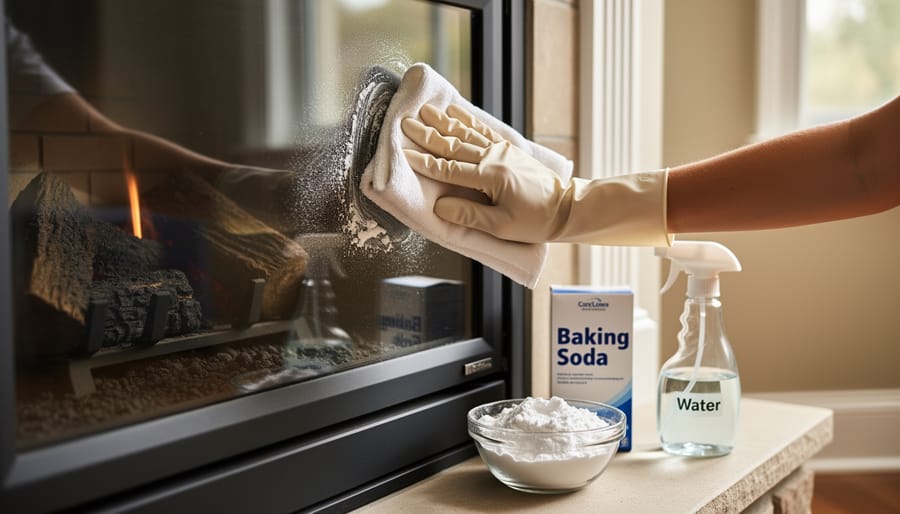
The secret weapon? A simple combination of baking soda and vinegar that you probably already have in your pantry. This method has saved me so much money on specialty cleaners, and I love that my kids can be in the room while I’m cleaning without worrying about harsh chemical fumes.
Here’s exactly how I do it:
- Wait until the glass is completely cool to the touch – this is crucial for both safety and effectiveness.
- Mix baking soda with just enough water to create a thick paste, about the consistency of toothpaste.
- Apply the paste generously to the sooty glass using a damp cloth or sponge, working in circular motions.
- Let the paste sit for at least 15-20 minutes to break down the stubborn buildup.
- Spray white vinegar over the baking soda paste and watch it fizz – this reaction helps lift the grime.
- Wipe away the mixture with a clean, damp microfiber cloth using vertical strokes to prevent streaking.
- Rinse your cloth and wipe again with plain water to remove any residue.
- Finish with a dry microfiber cloth, buffing in circular motions for a crystal-clear shine.
My biggest tip for avoiding those annoying streaks? Don’t skimp on the final buffing step, and always use a clean microfiber cloth. I learned this the hard way after rushing through the process before guests arrived and ending up with visible smudges.
For particularly stubborn spots that have built up over time, I sometimes need to repeat the process twice. It’s completely normal, so don’t get discouraged if your glass doesn’t sparkle on the first try. The beauty of this natural method is that it’s gentle enough to use as often as needed without damaging your fireplace glass.
Tackling Soot and Ash Buildup Inside the Firebox
The Damp Method for Dust Control
Here’s a game-changer I learned from my neighbor last winter that completely transformed my fireplace cleaning routine: the damp method. Before you start scooping out ash, lightly mist it with a spray bottle of water. You don’t want it soaking wet, just slightly damp to the touch. This simple step keeps ash particles from floating up into the air and settling all over your freshly cleaned living room (been there, done that, and it’s not fun).
The real secret weapon, though? Used coffee grounds. I know it sounds quirky, but sprinkle your leftover grounds over the ash before cleaning. The coffee grounds bind to those fine ash particles, weighing them down so they can’t escape into the air. Plus, your fireplace will smell pleasantly like coffee instead of, well, old fire. I save my morning grounds in a container specifically for this purpose now.
This method is especially helpful if you have kids or pets nearby, as it dramatically reduces the dust cloud that typically comes with ash removal. Just remember to keep things damp, not drenched, so cleanup stays manageable and your ash bucket doesn’t become a soggy mess.
Deep Cleaning Brick and Stone Surfaces
I’ll never forget the first time I tackled our brick fireplace with harsh chemicals—the fumes gave me such a headache that I vowed to find gentler alternatives. After years of experimenting, I’ve discovered that the most effective cleaners are sitting right in your pantry, and they work beautifully when paired with the right technique.
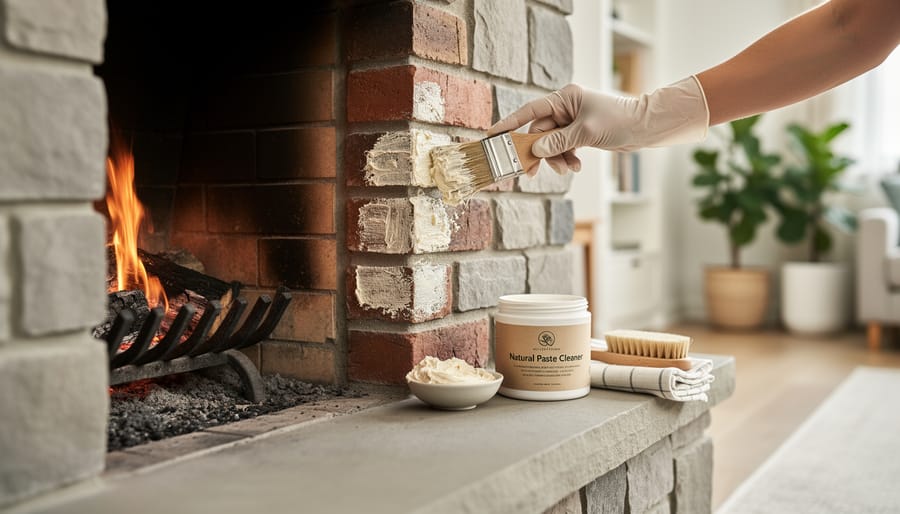
For everyday brick and stone cleaning, I swear by a simple paste made from half a cup of baking soda mixed with just enough water to create a spreadable consistency. Apply this to stubborn soot stains, let it sit for 15 minutes, then gently scrub with a soft-bristled brush using circular motions. This method fits perfectly into any deep cleaning process without overwhelming your schedule.
For tougher stains on lighter stone, I boost the power by adding a tablespoon of cream of tartar to the baking soda mixture. The mild acidity works wonders on discoloration without damaging the surface. My friend Sarah uses this combination monthly and her limestone hearth looks pristine.
Here’s my golden rule for scrubbing: always work from top to bottom, using gentle pressure with natural fiber brushes. Never use steel wool or abrasive pads—they’ll scratch the surface and create spots where soot embeds even deeper. After scrubbing, wipe everything down with a damp microfiber cloth, then dry thoroughly to prevent water stains. It’s honestly that simple, and your family stays safe from toxic fumes.
Maintaining Your Chimney Without Harsh Chemicals
I’ll be honest with you—when I first became a homeowner, I thought chimney maintenance meant just sweeping out ashes and hoping for the best. But after chatting with our neighbor who’s a retired firefighter, I quickly learned there’s a clear line between what we can safely handle ourselves and when we absolutely need to call in the pros.
The good news? There’s plenty you can do to keep your chimney in great shape without exposing your family to harsh chemicals or breaking the bank on constant professional visits.
Let me share what I’ve learned about dividing these responsibilities:
| DIY-Friendly Tasks | Professional Required |
|---|---|
| Monthly visual inspections of firebox and damper | Annual comprehensive chimney inspection |
| Cleaning glass doors with vinegar solution | Removing creosote buildup from flue |
| Removing ash and light soot after fires | Identifying and repairing structural damage |
| Checking for animal nests at chimney top (from ground level) | Installing or repairing chimney caps and crowns |
Your monthly visual inspection should be simple: grab a flashlight and look up into your chimney from the firebox. You’re checking for obvious blockages, excessive buildup (anything thicker than an eighth of an inch needs professional attention), and whether the damper opens and closes smoothly.
Here’s what changed my perspective completely: creosote, that tar-like substance that builds up from burning wood, is incredibly flammable. While we can safely clean light dustings with our non-toxic methods, anything more substantial requires a certified chimney sweep with proper equipment. This isn’t about lacking confidence in our DIY abilities—it’s about protecting our families from chimney fires.
I now schedule our professional inspection every September, right before heating season. Think of it like taking your car for an oil change—it’s preventive care that catches small issues before they become expensive, dangerous problems. The sweep can spot cracks, damaged mortar, or ventilation issues that aren’t visible to untrained eyes.
Creating Your Non-Toxic Fireplace Cleaning Schedule
Let me be honest—when we first bought our home, fireplace maintenance felt like this mysterious, overwhelming task that I kept putting off. But once I created a simple schedule based on how often we actually use our fireplace, everything changed. It became just another part of our routine, like my regular sanitizing checklist.
Here’s how I break it down: If you’re like us and use your fireplace regularly during colder months (think 2-3 times weekly), start with quick weekly tasks. After each use, once the ashes are completely cool—and I mean completely, waiting at least 24 hours—scoop them into a metal container. Do a visual check for any obvious buildup or debris. Takes maybe 10 minutes, tops.
Monthly, I do a deeper clean when we’re really going through wood. This is when I mix up my baking soda paste and tackle any soot stains on the firebox. I’ll also check the glass doors and clean them with that vinegar solution we all love.
For those of us who only enjoy occasional cozy fires (once or twice monthly), you can stretch these tasks out. A thorough cleaning after every 4-5 fires works perfectly fine.
The seasonal game-changer? Before your burning season starts—usually late fall—do a complete inspection and deep clean. Then again in spring, give everything a final scrub-down before closing up shop for warmer weather.
The key is adjusting this to your actual usage, not some impossible ideal. Your fireplace schedule should work for your life, not add stress to it. What matters most is consistency with whatever rhythm makes sense for your family.
I hope these tips have shown you that keeping your fireplace sparkling clean doesn’t mean filling your home with harsh fumes and questionable chemicals. When I first switched to these natural methods, I was honestly surprised by how well they worked. There’s something deeply satisfying about cleaning with ingredients I can actually pronounce, especially knowing my kids are playing just a few feet away.
Your fireplace is the heart of so many family moments—the cozy winter evenings, the hot chocolate conversations, the warmth that brings everyone together. It deserves care that protects both its function and your family’s wellbeing. These sustainable home practices really do make a difference in creating a healthier space for the people you love.
I’d love to hear from you! Have you tried any natural fireplace cleaning methods? Do you have a favorite tip or trick that works wonders in your home? Share your experiences in the comments below—we’re all learning together, and your wisdom might be exactly what another reader needs to hear. Here’s to clean hearths and happy homes!