
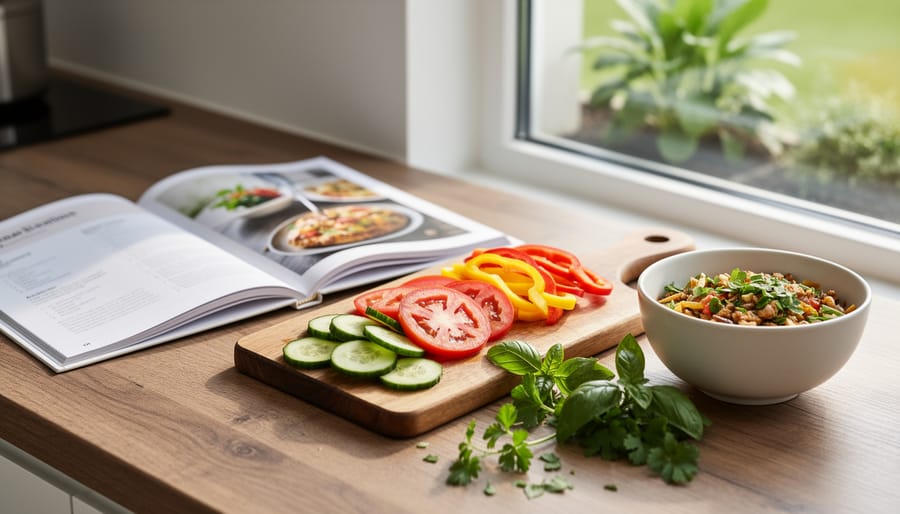
Mindful eating recipes transform ordinary meals into intentional moments of nourishment by slowing down preparation, engaging your senses fully, and choosing ingredients that honor both your body and the environment. The practice takes about the same time as regular cooking but shifts your attention from autopilot meal prep to a meditative experience that begins the moment you select your ingredients and continues through every chop, stir, and taste.
I’ll be honest: I stumbled into mindful cooking completely by accident. Last spring, I was rushing through dinner prep while scrolling through my phone, and I accidentally added salt instead of sugar to what was supposed to be a strawberry compote. My daughter took one bite and made a face I’ll never forget. That moment made me realize I’d been cooking on autopilot for months, maybe years. I wasn’t tasting, smelling, or even really present while making food for the people I love most.
What makes a recipe truly mindful isn’t exotic ingredients or complicated techniques. It’s about single-tasking during preparation, noticing the texture of vegetables as you chop them, breathing in the aroma of fresh herbs, and checking in with your hunger cues before, during, and after eating. The recipes I’m sharing today focus on simple, whole-food ingredients that require active engagement rather than passive assembly.
You’ll need basic kitchen tools you probably already own, plus a commitment to putting your phone in another room while you cook. The five complete recipes ahead walk you through building this practice one meal at a time.
What Makes a Recipe ‘Mindful’?
A mindful recipe starts with knowing exactly what you’re putting into your body. When I first began paying attention to my ingredients, I realized I’d been cooking on autopilot for years, tossing things into pans without considering where they came from or what they contained. Mindful recipes shift that pattern by asking you to read labels carefully, understand each component, and choose whole, minimally processed ingredients whenever possible. You’re not just following directions; you’re making conscious decisions about nourishment.
Seasonal eating forms another cornerstone of mindful recipes. There’s something grounding about cooking with foods that grow naturally during the current time of year. Spring asparagus in March, summer tomatoes in July, winter squash in November, these choices connect you to natural rhythms and typically offer better flavor and nutrition. Plus, seasonal ingredients often come from closer sources, reducing environmental impact and supporting your local food system.
Sensory engagement transforms cooking from a chore into meditation. A mindful recipe invites you to notice the snap of fresh green beans, the fragrance of herbs as you chop them, the transformation of colors as vegetables roast. You’re fully present with textures, aromas, and sounds rather than scrolling through your phone while things simmer.
Portion consciousness matters too. Mindful recipes help you serve amounts that satisfy without overwhelming, encouraging you to tune into hunger and fullness cues. This isn’t about restriction; it’s about awareness and honoring what your body actually needs.
Finally, mindful recipes acknowledge their origins. They might include notes about where ingredients come from, suggestions for ethical sourcing, or encouragement to support local farmers. This connection reminds you that food doesn’t magically appear in stores, it’s grown, raised, and harvested by real people making real environmental choices.
Tools and Materials for Mindful Recipe Preparation
You don’t need fancy equipment to cook mindfully, but having the right tools makes it easier to stay present and intentional. I learned this after years of fumbling through cluttered drawers mid-recipe, breaking my focus every time I searched for a measuring cup. The goal is to set up your kitchen so the tools support your practice rather than distract from it.
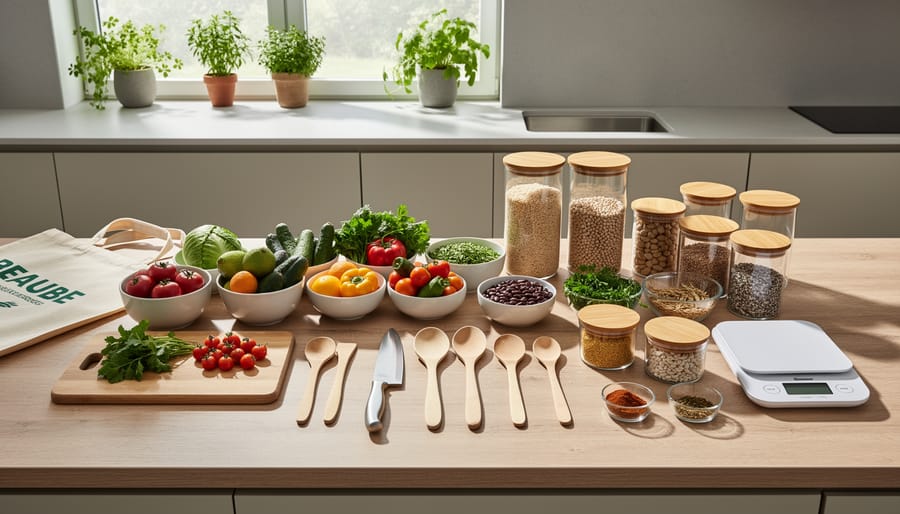
Start with a good chef’s knife and a paring knife that feel comfortable in your hand. When your knife works well, chopping becomes meditative rather than frustrating. You’ll also want a sturdy cutting board, ideally wood or bamboo, that anchors your prep work. Add a set of mixing bowls in various sizes for organizing ingredients before you cook, which helps you move through recipes with calm awareness instead of scrambling.
For sustainable meal prep, invest in quality storage containers. Glass containers with airtight lids work best because they’re transparent (you see what’s inside without opening them), microwave-safe, and don’t retain odors. Mason jars in multiple sizes are perfect for layered salads, overnight oats, and storing bulk pantry items where you can actually see your ingredients.
Your pantry forms the foundation of mindful cooking. Stock these essentials to support nourishing, intentional meals:
- Whole grains like quinoa, brown rice, and oats that provide sustained energy and versatile bases
- Legumes including lentils, chickpeas, and black beans for protein-rich, plant-forward meals
- Quality oils such as extra virgin olive oil and unrefined coconut oil for cooking with awareness of fat sources
- A spice collection featuring turmeric, cumin, cinnamon, and sea salt to engage your senses and add depth without processed additives
- Vinegars and citrus for brightness and balance in every dish
Optional items that deepen the practice: a small herb garden on your windowsill connects you directly to your food sources, and a food journal helps you track how different ingredients make you feel. Some people find a kitchen timer useful for staying present during longer cooking processes, while others prefer natural cues like aroma and texture changes. Choose what genuinely serves your mindful cooking journey.
Safety and Mindful Food Handling
Food safety isn’t just about following rules, it’s an essential expression of mindfulness that honors the ingredients you’ve chosen and the nourishment they’ll provide. When I first started meal prepping mindfully, I realized that proper handling extends the life of my food, directly supporting my sustainability goals by preventing waste before it happens.
Start with thorough washing of all produce, even items labeled pre-washed. Hold each vegetable or fruit under cool running water, feeling its texture and noticing any imperfections that need trimming. This simple act becomes meditative when you slow down and pay attention. For leafy greens and herbs, I gently swish them in a bowl of cold water, then lift them out rather than pouring through a colander, which leaves sediment behind.
Cross-contamination prevention requires conscious attention to your workspace. Designate separate cutting boards for produce and proteins, washing your hands between tasks without rushing through the motions. I keep my boards color-coded, which removes decision fatigue and keeps me present in the process. When preparing multiple recipes for the week, I always prevent cross-contamination by working through ingredients in order: produce first, then proteins, cleaning surfaces between each category.
Checking expiration dates becomes an act of inventory mindfulness rather than a chore. Each week, I rotate older items to the front of my refrigerator and plan recipes around what needs using first. This practice has dramatically reduced the guilt and waste I used to experience from forgotten produce, turning potential compost into nourishing meals instead.
Step-by-Step Process for Creating Mindful Eating Recipes
Planning Your Mindful Menu
Planning a mindful menu starts with checking what’s in season right now. I scan my local farmers market schedule or pull up a seasonal produce guide before I even think about specific recipes. July means tomatoes, zucchini, and stone fruits where I live, so I build my week around those ingredients rather than forcing a winter squash recipe.
Next, I consider my body’s actual needs this week. Am I feeling low energy and craving grounding root vegetables? Did I overdo protein yesterday and need lighter meals today? Mindful menu planning isn’t about perfect macros; it’s about honest check-ins with how you feel.
I then set a simple intention for each meal. Maybe Monday’s dinner intention is “comforting and easy” while Wednesday’s lunch is “energizing and fresh.” These intentions guide my recipe choices without rigid rules.
Finally, I plan for leftovers deliberately. That roasted vegetable batch becomes tomorrow’s grain bowl base, and tonight’s cooked grains stretch into two more meals. This approach cuts waste while reducing the mental load of cooking from scratch daily. When you plan with awareness, three recipes can feed you mindfully for an entire week.
Shopping with Intention
Shopping begins before you reach the store. Take five minutes to review what you already have and create a list organized by store layout. This simple act prevents duplicate purchases and anchors you to actual needs rather than marketing influences.
At the store, start in the produce section when your energy and attention are highest. Pick up each item and notice its weight, firmness, and scent. Seasonal produce requires less explanation on labels because it speaks for itself through vibrant color and natural aroma. If tomatoes are rock-hard and flavorless in January, they travelled far and won’t nourish you the way August tomatoes will.
Label reading is detective work, not speed reading. Turn packages around and scan the ingredient list rather than the front claims. Ingredients appear in order by weight. If sugar ranks third, that product is primarily sugar regardless of what the marketing promises. Five ingredients you recognize beats fifteen you can’t pronounce.
Local sourcing matters for freshness and supports regional growers, but it isn’t always available or affordable. When choosing between local conventional and distant organic, consider your priorities and budget without judgment. Perfection isn’t the goal; conscious choice is.
Preparing Ingredients Mindfully
The simple act of washing lettuce can become a form of meditation when you approach it with full attention. I’ve found that my most peaceful cooking experiences happen during prep work, not the actual cooking. This is where mindfulness truly begins.
Start by clearing your workspace of clutter and unnecessary distractions. Put your phone in another room. If you enjoy background sound, choose instrumental music or nature sounds rather than podcasts that demand mental attention.
As you wash vegetables, notice the temperature of the water against your hands, the texture of each leaf or root, the earthy smell released as dirt rinses away. This sensory engagement anchors you in the present moment.
When chopping, focus entirely on the knife’s rhythm and the sound it makes against the cutting board. Feel the resistance of each ingredient. Notice how a carrot feels different from celery, how their colors contrast on your board.
Arrange prepped ingredients in small bowls before you begin cooking. This “mise en place” practice isn’t just about organization; it creates visual calm and lets you appreciate each component individually. You’re not rushing toward the finished dish but honoring each step of its creation.
Cooking with Presence
Cooking becomes meditation when you shift from autopilot to attention. Start by setting aside distractions, put your phone in another room and turn off the TV. As you cook, engage each sense deliberately. Notice the sizzle of onions hitting hot oil, the bright green of basil against your cutting board, the warmth rising from the stove.
Taste as you go, but make it intentional. When you adjust seasoning, pause. Add salt in small pinches, tasting between additions rather than dumping it in. Ask yourself: does this need brightness or depth? A squeeze of lemon or another minute of browning?
Your breath is your anchor. If you catch yourself rushing or worrying about the next step, take three slow breaths. Let your hands move at their own pace. There’s no prize for speed.
When your mind wanders to your to-do list or tomorrow’s problems, gently bring it back to the texture of the dough you’re kneading or the aroma building in your pan. This practice transforms cooking from a chore into an experience that nourishes you before you even sit down to eat.
Portioning and Storage for Sustainable Meal Prep
Once your mindful recipe is cooked, portioning becomes the next meditation. I’ve learned to dish up meals while they’re still warm but not steaming, which gives me a moment to truly see what I’ve created. Use a kitchen scale or measuring cups initially, not to be rigid, but to calibrate your eye for what satisfies your body’s actual needs.
Glass containers work beautifully for storage because you can see your food, which keeps you connected to what you’ve prepared. I stack mine in the fridge with the earliest meals at the front. Label each container with the date and contents using masking tape and a marker, it sounds simple, but this small act prevents those mystery containers that turn into waste three weeks later.
For freshness, let hot food cool for about thirty minutes before sealing. Store grains and proteins separately from fresh ingredients when possible, then combine them just before eating. This keeps textures distinct and extends shelf life. Freezer-friendly portions go into dated bags with air pressed out, future you will appreciate having these mindful meals ready when time feels scarce.
The real sustainability comes from actually eating what you store. Check your fridge every few days, moving older portions forward and planning meals around what needs using first.
Five Mindful Eating Recipes to Try
Sunrise Grain Bowl with Seasonal Vegetables
Start your morning with intention by building a grain bowl that shifts with the seasons and your body’s needs.
Base (choose one): Cooked quinoa, steel-cut oats, or brown rice, prepare a large batch on Sunday and refrigerate for five days.
Seasonal vegetables (pick two or three): In spring, try asparagus and peas. Summer brings tomatoes and zucchini. Fall means roasted butternut squash and Brussels sprouts. Winter calls for kale and sweet potato.
Protein (one serving): A soft-boiled egg, hemp seeds, or white beans work beautifully here.
Mindful element: As you assemble each layer, notice the colors you’re creating. Pause between ingredients. Drizzle with olive oil and lemon juice, then season consciously, taste as you go rather than dumping salt automatically.
Prep-ahead tip: Roast a sheet pan of seasonal vegetables on Sunday evening. Store in glass containers. Each morning, you’re simply warming and combining, which takes three minutes but still demands your full attention.
Slow-Cooked Root Vegetable Stew
This stew transforms humble carrots, parsnips, and sweet potatoes into something deeply comforting. Start by washing and chopping your vegetables into similar-sized pieces, notice their earthy scent and varied textures. In a heavy pot, sauté diced onions until fragrant, then add your root vegetables with vegetable broth, a bay leaf, and fresh thyme. Bring to a simmer, then reduce heat to low and let it cook gently for 45 minutes. The slow transformation teaches patience as hard vegetables soften and flavors meld. Season with salt and pepper to taste, adding a splash of apple cider vinegar to brighten the earthiness. This recipe makes six servings that freeze beautifully, providing nourishing lunches throughout the week while celebrating the satisfying simplicity of whole vegetables.
Herb-Focused Buddha Bowl
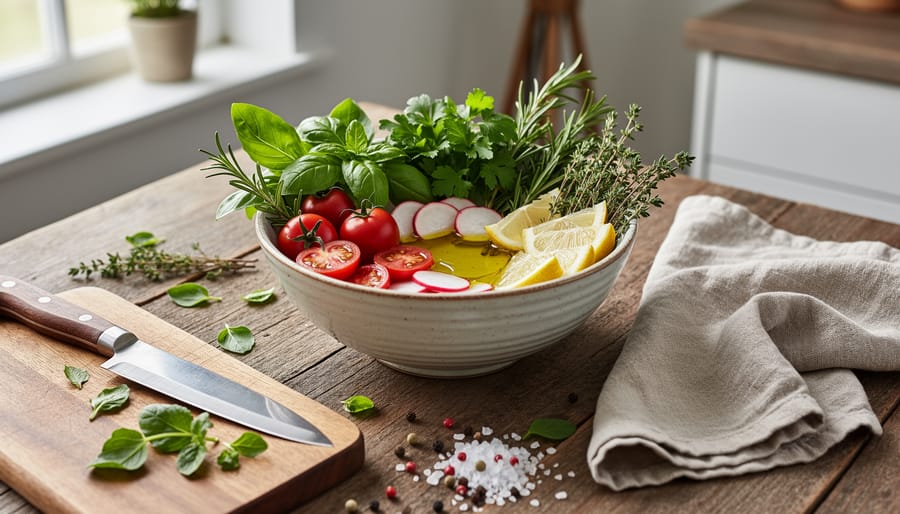
Start with mixed greens as your base, then add roasted chickpeas, quinoa, shredded carrots, and sliced cucumber. The star here is fresh herbs, at least three varieties. I use cilantro, mint, and basil, tearing them by hand to release their oils and aroma. Notice how each herb smells different as you prepare it.
Top with a tahini-lemon dressing infused with more fresh herbs. If you’re growing herbs at home, harvest them just before assembly. Even a small windowsill pot connects you more deeply to your ingredients. When you’ve nurtured the plant yourself, you naturally slow down and appreciate each leaf. The sensory experience, vivid colors, distinct scents, varied textures, anchors you in the present moment while you eat.
Prep the grains and proteins ahead, but add herbs fresh each time to maintain their vibrant flavor and your mindful connection to the meal.
Mindful Mason Jar Salads
Mason jar salads transform mindful eating into a visual experience. When you layer ingredients in a clear jar, you see exactly what you’re consuming, no hidden dressings or forgotten vegetables at the bottom of a container. Start with two tablespoons of dressing at the base, followed by sturdy vegetables like cucumber or bell peppers that won’t absorb liquid. Add beans or grains next, then softer items like tomatoes, and finish with greens at the top.
This method preserves freshness for five days while preventing the food waste that happens when salad greens wilt prematurely. Try a Mediterranean combination: lemon vinaigrette, chickpeas, cucumber, cherry tomatoes, feta, and arugula. Or go Asian-inspired: sesame-ginger dressing, edamame, shredded carrots, purple cabbage, and mixed greens. When you’re ready to eat, shake the jar to distribute the dressing, a small ritual that brings you into the present moment before your meal.
One-Pan Roasted Dinner with Intention
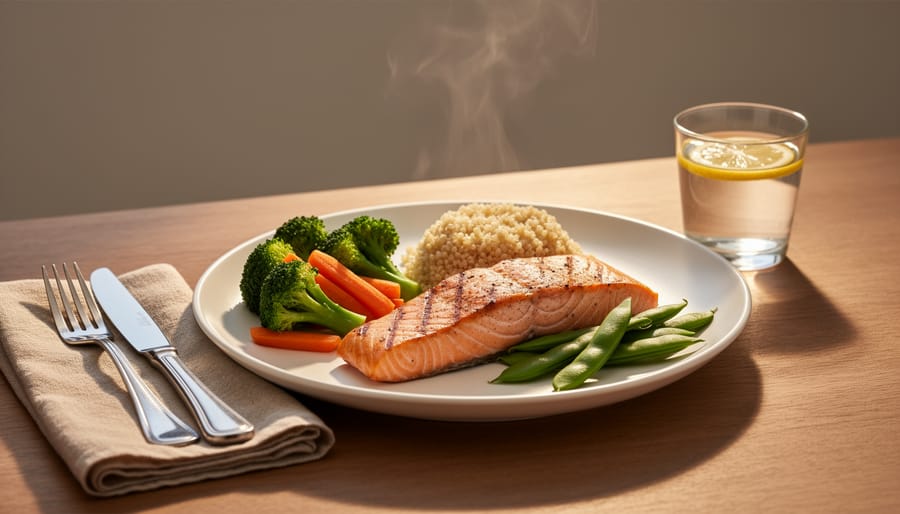
This sheet-pan dinner teaches ingredient pairing through a simple formula: protein + sturdy vegetables + aromatics + mindful seasoning. Choose one protein (chicken thighs, salmon, or chickpeas), two contrasting vegetables (sweet potato and broccoli, or squash and Brussels sprouts), and aromatics that complement rather than overpower.
The mindful element comes during seasoning. Instead of following exact measurements, taste your olive oil blend before coating ingredients. Notice how lemon brightens, how garlic adds depth, how herbs transform the dish. Arrange ingredients with space between pieces so they roast rather than steam.
Scale by using multiple pans, keeping cook times consistent. Roast at 425°F for 25-35 minutes, checking once midway. The single-pan approach reduces cleanup and encourages you to be present for the transformation happening in your oven.
Verification: How to Know You’re Eating Mindfully
The most reliable verification that you’re truly practicing mindful eating isn’t found on a checklist, it emerges naturally in how you feel during and after meals. When recipes align with mindful principles, you’ll notice shifts in your physical sensations, emotional relationship with food, and daily habits around eating.
Your body offers immediate feedback. After eating a mindful recipe, you should feel satisfied without the uncomfortable fullness that signals disconnection from hunger cues. Digestion improves when you’ve eaten slowly and chosen ingredients your body recognizes and processes efficiently. You might notice steadier energy levels throughout the day rather than the spikes and crashes that come from rushed or unconscious eating. These physical indicators confirm that your recipe choices and eating pace support your wellbeing.
Several concrete signs indicate successful mindful eating practices:
- Feeling satisfied rather than stuffed after meals
- Reduced food waste as you buy and prepare only what you’ll actually eat
- Increased enjoyment and memory of meals instead of forgetting what you ate
- Better digestion and fewer digestive complaints
- Stronger connection to seasonal rhythms and what’s available locally
- More sustainable grocery habits with less impulse buying
Beyond these markers, pay attention to your awareness during meals. Can you describe the flavors, textures, and colors of what you just ate? Did you taste your food, or simply consume it? If you find yourself scrolling through your phone or standing at the counter while eating, that’s valuable information, not a failure, but an opportunity to adjust. Mindful eating develops gradually, and awareness itself is the first step toward change.
Common Questions About Mindful Eating Recipes
I hear from so many of you that while the concept of mindful eating sounds wonderful, the reality of daily life presents real challenges. You’re juggling work, family, budgets, and dietary restrictions, wondering if mindful eating recipes are actually achievable in your world. Let me address the questions that come up most often in our community conversations.
How much extra time does mindful cooking actually take?
Mindful cooking doesn’t necessarily take more time, it’s about bringing attention to time you’re already spending. A mindful 20-minute meal prepared with focus often feels more satisfying than a rushed 40-minute dinner where you’re multitasking and stressed.
Is mindful eating more expensive?
Not inherently. Mindful eating actually helps you waste less food, buy only what you need, and appreciate simpler ingredients, which can reduce costs. Focusing on seasonal produce and whole foods rather than processed items often balances out any increase from choosing quality ingredients.
How do I make mindful recipes work for my whole family?
Start with base recipes everyone enjoys, then add individual customizations at serving time. The grain bowls and mason jar salads I shared earlier work beautifully because each family member can choose their own toppings and portions while you maintain the mindful preparation approach.
Can I practice mindful eating with dietary restrictions?
Absolutely. Mindful eating actually supports working with restrictions because it encourages you to truly understand what nourishes your specific body. Simply adapt the recipes by substituting ingredients that work for you while maintaining the same intentional approach to preparation and eating.
The question of maintaining consistency comes up constantly. You’re motivated after reading about mindful eating, you prep a beautiful batch of meals, and then life happens. Wednesday arrives and you’re eating leftovers standing at the counter, scrolling your phone. Here’s what I’ve learned: perfection isn’t the goal, and one unmindful meal doesn’t erase your practice. Some weeks you’ll prep five mindful recipes, other weeks you’ll manage one simple grain bowl. Both count.
When time feels impossibly tight, scale back rather than abandon the practice entirely. Choose one meal, maybe Sunday breakfast, where you commit to mindful preparation and eating. Let that anchor your week. As that becomes natural, you can expand. I’ve found that even ten minutes of truly present cooking does more for my wellbeing than an hour of stressed meal prep where I’m mentally elsewhere.
If your mindfully prepared meals aren’t lasting as long as you’d hoped, revisit the storage and portioning guidance from earlier. Properly stored mindful recipes typically last three to five days in the refrigerator, with many options freezing well for longer storage. Label everything with dates, and trust both your senses and safe food handling practices when deciding what’s still good to eat.
Creating mindful eating recipes isn’t about perfection. It’s about building a relationship with your food that feels good, nourishes your body, and respects the planet. Every time you choose to slow down, notice the colors on your cutting board, or appreciate where your ingredients came from, you’re practicing mindfulness.
I’ll be honest: I still have days when I grab whatever’s fastest and eat while answering emails. That’s real life. But the difference now is that I have these practices to return to, these recipes that ground me when everything else feels chaotic. My kitchen has become a place of intention rather than just another daily task to check off.
The connection between mindful eating and sustainable living surprised me at first, but it makes complete sense. When you’re truly present with your food, waste naturally decreases. You use what you have. You notice what your body actually needs. You find joy in simple ingredients rather than constantly chasing the next food trend.
Start with just one recipe this week. Notice how it feels to prepare it with full attention. Pay attention to whether you feel more satisfied afterward. Small shifts create lasting change.
I’d love to hear about your experience with mindful eating. What recipes help you slow down? What challenges come up for you? Share in the comments below. Your insights might be exactly what another reader needs to hear.